Why Tulsidas Began Hanuman Chalisa With Guru’s Dust
Noopur Kumari | Jun 17, 2026, 07:00 IST
Millions of people recite the Hanuman Chalisa every day, but very few stop to understand the profound wisdom hidden in its very first doha. Why does Tulsidas Ji begin with the Guru instead of Hanuman Ji? What are the mysterious “four fruits” he mentions? And how can this single verse transform a person's spiritual journey? The answers reveal a timeless truth that is as relevant today as it was centuries ago.

Before the powerful praises of Hanuman Ji begin, Tulsidas Ji presents a simple yet deeply meaningful prayer. At first glance, the first doha appears to be an act of humility. But hidden within these lines is a complete roadmap for spiritual growth. It teaches the importance of a pure mind, the role of a Guru, the glory of Lord Ram, and the ultimate goals of human life. Understanding this doha can completely change the way you experience the Hanuman Chalisa.
![Seeking Light Through the Guru]()
Before praising Hanuman Ji, Tulsidas Ji bows to his Guru. This is not a coincidence. In Hindu tradition, the Guru is the bridge between ignorance and knowledge. The phrase "Shri Guru Charan Saroj Raj" refers to the sacred dust of the Guru’s lotus feet, symbolizing humility and surrender. Tulsidas Ji teaches that spiritual wisdom cannot enter a mind filled with ego. By honoring the Guru first, he reminds us that every journey toward God begins with guidance, gratitude, and respect for those who illuminate our path.
![The Mirror of the Mind]()
Tulsidas Ji compares the human mind to a mirror. Over time, this mirror becomes covered with dust in the form of pride, anger, jealousy, and distractions. When the mirror is dirty, we cannot see reality clearly. The Guru’s wisdom acts as a cleansing force, removing these impurities. Only a purified mind can truly understand divine teachings. This powerful metaphor reminds us that spiritual progress is not about changing the world around us it begins by cleaning the mirror within ourselves.
After purifying his mind, Tulsidas Ji says he will describe the spotless glory of Lord Ram. The word “Bimal” means pure, untouched by selfishness or negativity. Ram’s life is a model of ideal conduct, sacrifice, compassion, and righteousness. By focusing on His virtues, a person naturally develops similar qualities. Tulsidas Ji is not merely narrating a story; he is inviting readers to absorb the values embodied by Lord Ram and make them a part of everyday life.
One of the most intriguing parts of the first doha is the mention of “four fruits.” These are Dharma (righteousness), Artha (prosperity), Kama (desires), and Moksha (liberation). According to Hindu philosophy, these four goals define a complete human life. Tulsidas Ji reveals that devotion to Lord Ram helps a person achieve balance in all these areas. Rather than choosing one over another, true spirituality harmonizes worldly responsibilities with the ultimate quest for liberation.
Among the four fruits, Dharma comes first because it supports everything else. Without righteousness, wealth can become greed and desires can become obsession. Lord Ram’s life demonstrates how Dharma should guide every decision, even during difficult times. Tulsidas Ji subtly teaches that success without values is incomplete. When Dharma becomes the foundation, every action gains purpose and meaning. It becomes the compass that helps individuals navigate challenges while remaining true to their principles.
Although Hanuman Ji is not directly mentioned in the first doha, his presence is felt throughout its message. Hanuman Ji perfectly represents the qualities Tulsidas Ji highlights humility before the Guru, purity of mind, devotion to Lord Ram, and dedication to Dharma. In many ways, the first doha prepares readers to understand Hanuman Ji’s greatness. It establishes the spiritual values that Hanuman embodies, making the rest of the Chalisa even more meaningful.
Many people recite the Hanuman Chalisa for blessings, protection, or peace of mind. However, the first doha reveals a deeper lesson: transformation begins within. Before seeking success, solutions, or spiritual experiences, we must first purify our thoughts and attitudes. Tulsidas Ji reminds us that wisdom enters only a humble and receptive heart. This message remains just as relevant today, offering a practical guide for inner growth in an increasingly distracted world.
Unlock insightful tips and inspiration on personal growth, productivity, and well-being. Stay motivated and updated with the latest at My Life XP.
1. What is the meaning of the first doha of Hanuman Chalisa?
The first doha is a prayer by Tulsidas Ji seeking the blessings of his Guru before describing the divine glory of Lord Ram. It emphasizes humility, purification of the mind, and devotion as the foundation of spiritual growth.
2. Why does Hanuman Chalisa begin with the Guru?
Tulsidas Ji begins with the Guru because, in Hindu tradition, the Guru removes ignorance and guides a person toward truth and wisdom. The Guru's blessings prepare the mind to understand divine teachings.
3. What does "Nij Manu Mukuru Sudhari" mean?
It means "cleansing the mirror of one's mind." Tulsidas Ji compares the mind to a mirror that becomes clouded by ego, anger, and negativity. Spiritual wisdom can only be reflected in a pure and clean mind.
4. Who is Raghubar in the first doha?
"Raghubar" is one of the names of Lord Ram. It means "the best among the Raghu dynasty" and highlights His noble character, righteousness, and divine virtues.
Why Tulsidas Ji Begins With the Guru

Seeking Light Through the Guru
Before praising Hanuman Ji, Tulsidas Ji bows to his Guru. This is not a coincidence. In Hindu tradition, the Guru is the bridge between ignorance and knowledge. The phrase "Shri Guru Charan Saroj Raj" refers to the sacred dust of the Guru’s lotus feet, symbolizing humility and surrender. Tulsidas Ji teaches that spiritual wisdom cannot enter a mind filled with ego. By honoring the Guru first, he reminds us that every journey toward God begins with guidance, gratitude, and respect for those who illuminate our path.
The Mind Is a Mirror But Is It Clean?
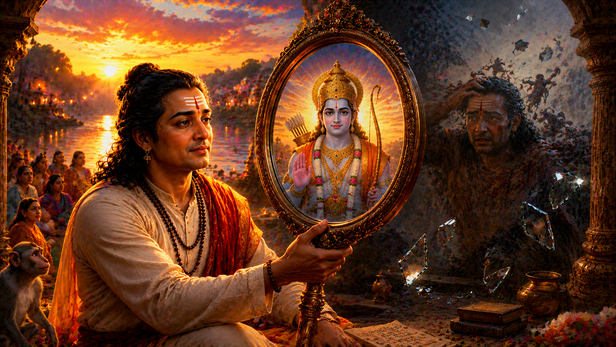
The Mirror of the Mind
Tulsidas Ji compares the human mind to a mirror. Over time, this mirror becomes covered with dust in the form of pride, anger, jealousy, and distractions. When the mirror is dirty, we cannot see reality clearly. The Guru’s wisdom acts as a cleansing force, removing these impurities. Only a purified mind can truly understand divine teachings. This powerful metaphor reminds us that spiritual progress is not about changing the world around us it begins by cleaning the mirror within ourselves.
The Divine Glory Hidden in Lord Ram’s Name
The Mystery of the Four Divine Fruits
How Dharma Becomes the Foundation
The Hidden Connection Between Hanuman and This Doha
The Lesson Modern Readers Often Overlook
Unlock insightful tips and inspiration on personal growth, productivity, and well-being. Stay motivated and updated with the latest at My Life XP.
Frequently Asked Questions (FAQs)
The first doha is a prayer by Tulsidas Ji seeking the blessings of his Guru before describing the divine glory of Lord Ram. It emphasizes humility, purification of the mind, and devotion as the foundation of spiritual growth.
2. Why does Hanuman Chalisa begin with the Guru?
Tulsidas Ji begins with the Guru because, in Hindu tradition, the Guru removes ignorance and guides a person toward truth and wisdom. The Guru's blessings prepare the mind to understand divine teachings.
3. What does "Nij Manu Mukuru Sudhari" mean?
It means "cleansing the mirror of one's mind." Tulsidas Ji compares the mind to a mirror that becomes clouded by ego, anger, and negativity. Spiritual wisdom can only be reflected in a pure and clean mind.
4. Who is Raghubar in the first doha?
"Raghubar" is one of the names of Lord Ram. It means "the best among the Raghu dynasty" and highlights His noble character, righteousness, and divine virtues.