Imagine asking your phone for advice while preparing dinner. Instead of typing a question and waiting for a response, you simply speak. The AI listens, answers immediately and allows you to interrupt whenever you want to add something.This experience is becoming a reality.
What Happens When AI Starts Talking Like a Human?
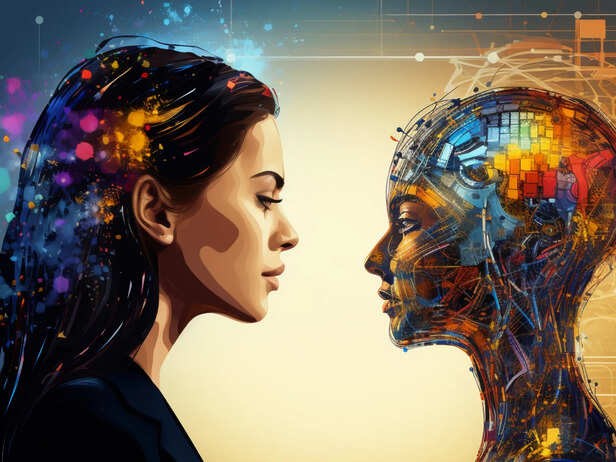
![Talking to AI]()
Talking to AI
Image credit : Freepik
Technology companies are developing AI assistants that can communicate through natural-sounding voices rather than relying only on written conversations. Some are also introducing animated avatars that move their faces and gestures while speaking.For example, Meta announced voice conversations and expressive avatars for its Muse AI agent in November 2026. The feature allows users to speak to the assistant in real time, interrupt it and choose from different voices. The rollout initially began in the United States.
This development raises an interesting question: if talking to AI becomes as easy as calling someone, will people begin having more conversations with machines than with other humans?
Why Are People Becoming Comfortable Talking to AI?
One reason is convenience. People already use AI tools to find information, prepare messages, solve problems and organise everyday tasks. Voice features make these activities easier because users do not have to stop what they are doing to type.For example, someone can ask an AI assistant to explain a difficult topic while travelling, practise a job interview while walking or discuss ideas while doing household chores.
There is also another reason: AI conversations can feel less intimidating.A person may hesitate to ask a basic question in front of colleagues or friends because they fear being judged. With an AI assistant, they can ask the same question repeatedly without worrying about embarrassment.Some people also use chatbots to discuss personal concerns, share their thoughts or simply have someone to talk to when they feel lonely.However, this does not mean everyone is replacing human conversations with AI. For many users, these tools are still mainly a convenient way to complete tasks or find information.
Can AI Become a Digital Companion?
AI assistants are gradually moving beyond their traditional role of answering questions. Some are designed to remember details from previous interactions, adapt their responses and offer more personalised conversations.This can make an interaction feel familiar over time. A user might return to the same AI tool to discuss a difficult day, practise a language, explore an interest or talk through a decision.
Research is also beginning to examine this behaviour. A September 2026 survey by Elon University's Imagining the Digital Future Center found that 27% of surveyed US adults who use the internet had social interactions with AI systems. The study explored how people were developing connections and feelings of trust towards these tools.Another survey conducted by researchers at the University of Iowa found that 12% of AI users in its US sample used the technology for companionship or conversation. The figure was higher among younger adults in the survey.
These findings suggest that people are already exploring AI for more personal interactions. However, they do not prove that AI has replaced human relationships or that people generally prefer machines over friends and family.
Why Talking to AI May Feel Easier Than Talking to People
Human conversations can be complicated. People have different opinions, emotions, expectations and communication styles. A disagreement can sometimes turn into an argument, while a personal conversation may require trust and patience.AI conversations can feel simpler because users can usually start or stop them whenever they want. They do not have to worry about interrupting someone's schedule, explaining why they need help or receiving an immediate emotional reaction.
Consider someone preparing for an important presentation. They may feel nervous about practising in front of colleagues. An AI assistant can help them rehearse, suggest improvements and repeat the exercise as many times as needed.
Similarly, someone learning a new language can practise speaking without worrying about making mistakes in front of another person.But there is an important difference. An AI assistant generates responses based on patterns in data and its design. Even if its words sound caring, that does not mean it experiences emotions or understands a person's feelings in the same way another human might.
Could AI Conversations Affect Human Relationships?
The growing use of conversational AI brings both opportunities and concerns.On the positive side, AI can help people practise communication, organise their thoughts and find information before discussing a problem with someone they trust. It may also offer a way to practise conversations for people who feel nervous about social situations.
However, problems can arise when someone begins depending on AI for almost every personal conversation.
Real relationships involve more than exchanging words. They include shared experiences, emotional understanding, mutual responsibilities, physical presence and the ability to support one another through difficult situations.An AI assistant cannot replace all these aspects of human connection.
There is also a risk that people may become accustomed to conversations in which the other side is always available and responds according to their preferences. Real people do not always agree, respond immediately or say what we want to hear. Learning to handle these differences is an important part of building relationships.Privacy is another concern. People may share personal details, family issues, financial worries or private thoughts with AI tools. Before doing so, they should understand how a service stores and uses conversations, what data controls are available and whether their information may be used to improve its systems.
Will Voice AI Replace Phone Calls and Everyday Conversations?
Voice AI could change how people use phones, but replacing human conversations completely is unlikely.For routine tasks, many users may prefer speaking to an AI assistant. Asking for directions, checking information, planning a schedule or getting help with a simple task can be quicker through voice commands.
AI may also become useful for practising interviews, learning languages, brainstorming ideas and getting explanations while multitasking.But people are likely to continue calling friends to share exciting news, speaking to family members about important decisions and meeting colleagues to discuss work. These interactions carry emotional and social value that goes beyond getting an answer.
The more realistic possibility is that people will use AI for certain conversations while continuing to depend on humans for relationships, shared experiences and emotional support.
What Should People Be Careful About?
As voice-based AI becomes more advanced, it is worth keeping a few things in mind:
- Do not treat every answer as correct: AI can make mistakes, misunderstand questions or provide misleading information. Verify important details.
- Protect personal information: Avoid sharing sensitive details unless you understand the platform's privacy practices.
- Maintain real-world connections: Make time for conversations with friends, family and people around you.
- Understand the limits of AI: A convincing voice or caring response does not mean the system has human feelings.
- Use AI with a purpose: Let it help with learning, planning and practising, rather than allowing it to take over every personal interaction.
The goal should be to use technology in ways that make everyday life easier without losing meaningful human contact.
More AI Conversations, But Not Necessarily Fewer Human Bonds
The way people communicate is changing. As AI assistants become capable of holding natural, real-time voice conversations, speaking to a machine may soon feel as ordinary as sending a message or making a phone call.Some people may turn to AI for quick advice, practice or companionship, while others may use it mainly to complete everyday tasks. But having more conversations with AI does not automatically mean having fewer meaningful relationships with people.
AI can provide information, help organise thoughts and offer a convenient space to practise conversations. It cannot fully replace the shared experiences, emotions and mutual understanding that make human relationships important.Perhaps the bigger question is not whether we will talk to AI more than people. It is whether we will remember to make time for the people who matter while enjoying the convenience of talking to machines.
Unlock insightful tips and inspiration on personal growth, productivity, and well-being. Stay motivated and updated with the latest at
My Life XP.