Stand at the edge of any lagoon in Lakshadweep and the water inside the ring is a different colour from the ocean outside it. Turquoise within, deep blue beyond. The reef wall is the reason, but the wall itself needs explaining. These rings did not form because coral grows in circles. They form because something that once rose above the water has since gone under it, and the coral kept building upward while the island disappeared.
The Idea That Changed How We Read Coastlines
![Coral Limestone Macro Texture]()
Coral Limestone Macro Texture
Image credit : MyLifeXP Bureau
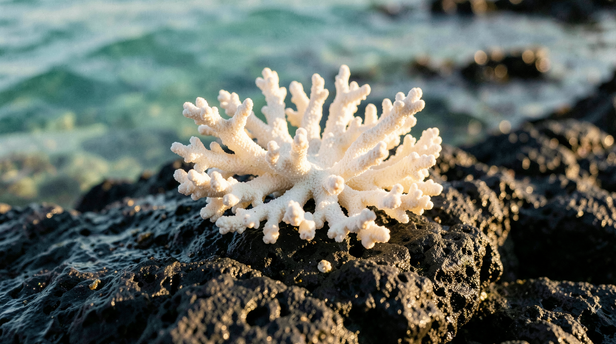
In the 1830s, Charles Darwin spent time among Pacific atolls and noticed what nobody had formally explained: coral reefs came in three shapes that seemed to be stages of the same process. A fringing reef hugs a volcanic island closely, growing in the shallows right against the shore. A barrier reef sits further out, with a lagoon between it and the island. An atoll is a ring with no island at all, only a lagoon where the island once was. Darwin argued that all three were the same reef at different points in a single story. The island sinks. The reef keeps growing toward the light. The lagoon is the space the island left behind. It took more than a century for oceanographers to drill through atoll limestone and confirm what he had reasoned from the surface alone. Below the coral, they found volcanic basalt, the drowned foundation.
What the Seafloor Is Actually Doing
The Indian Ocean plate on which Lakshadweep sits is not stationary. It moves, slowly and continuously, away from the mid-ocean ridge where new crust is born. As the plate travels, it cools and becomes denser, and it subsides, it sinks, very gradually, into the mantle below. A volcanic island that once broke the surface follows the plate down. The process takes millions of years. Lakshadweep's atolls are old enough that the original volcanic peaks are now hundreds of metres below the lagoon floor. The coral that once fringed those peaks has been building upward the entire time, matching the rate of subsidence closely enough to stay near the surface where sunlight and warm water sustain it. The ring shape is the outcome of that race: the reef grew up and inward as the island shrank and sank, until only the reef remained, enclosing the memory of a mountain in a circle of shallow water.
Why the Lagoon Is Calm and the Ocean Outside Is Not
The reef wall does more than mark a boundary. It absorbs the energy of open-ocean swells before they reach the lagoon. Waves that have crossed hundreds of kilometres of open water meet the reef's outer slope and break there, spending most of their force on coral and limestone rather than on the enclosed water inside. The lagoon surface stays relatively flat as a result. This is not a coincidence of geography, it is a structural consequence of the atoll's shape. The ring is also a filter. Sand and sediment that wash in settle in the calm lagoon water rather than being swept away, which is why the lagoon floor tends to be sandy and shallow while the outer reef drops away steeply into deep water almost immediately beyond the wall.
![Bleached Coral on Basalt]()
Bleached Coral on Basalt
Image credit : AI
The Coral That Built All of This
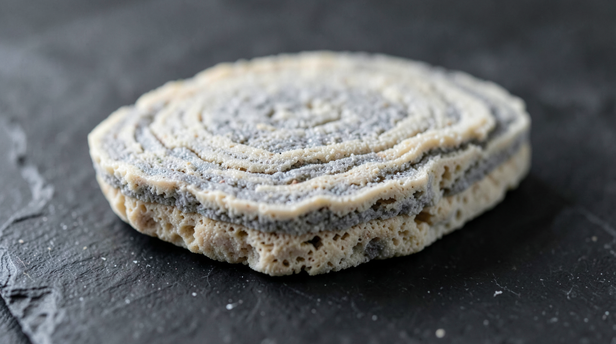
Coral looks like rock and behaves like a city. Each polyp is a small animal that secretes a calcium carbonate skeleton around itself. When it dies, the skeleton remains, and new polyps grow on top of it. Over thousands of generations, this accumulation becomes the reef structure. The upward growth rate is slow, measured in millimetres to a few centimetres per year depending on species and conditions, but it has been continuous for long enough to produce limestone formations that are hundreds of metres thick. The coral that built Lakshadweep's atolls was not the same coral that lives there now. The living reef is a thin surface layer on top of an immense archive of older growth, most of it compressed into dense limestone that records every shift in sea level and water temperature going back through geological time. Cores drilled from atoll limestone have been used to reconstruct ancient climates the way tree rings record wet and dry years.
What the Ring Shape Means for Everything That Lives Inside It
The atoll's geometry creates conditions that would not exist in open water. The lagoon is warmer than the surrounding ocean, shallower, and more sheltered, which suits different species than the outer reef does. Seagrass meadows grow in lagoon shallows where the sandy floor and calm water give them stable ground. Juvenile fish use the lagoon as a nursery before moving to the outer reef. The reef wall itself supports the highest density of life, where the current brings nutrients from the open ocean and the structure provides shelter and surface for attachment. The ring is not just a shape, it is a habitat gradient, from the exposed and nutrient-rich outer slope to the protected and warm lagoon interior, with the reef crest between them as the most energetic zone of all. Each zone supports a different community, and the atoll functions as a single system because the ring connects them all.
The volcanic island that gave Lakshadweep its atolls is gone in any form a visitor could see, but its outline survives in the shape of every lagoon. The reef grew because the island sank, and the ring is the record of that slow disappearance, a circle drawn in coral around an absence, still building upward, still keeping pace with a seafloor that has not finished moving.
Unlock insightful tips and inspiration on personal growth, productivity, and well-being. Stay motivated and updated with the latest at
My Life XP.