Run your fingertips from your cheek down to your forearm and you will feel the shift immediately. The face feels smooth, slightly yielding, almost fine-grained. The arm feels drier, sometimes faintly rough, occasionally with small raised bumps that never quite go away no matter what you put on them. Most people assume the difference is effort, that they simply haven't moisturised their arms enough. The real explanation sits deeper, in the structure of the skin itself.
Skin Is Not One Uniform Organ
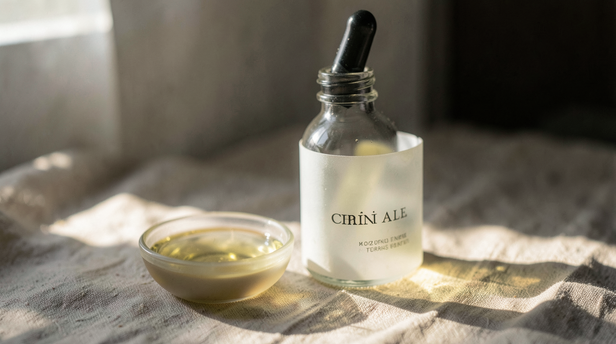
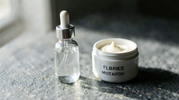
![Frosted Dropper and Oil]()
Frosted Dropper and Oil
Image credit : AI
The skin covering your face and the skin covering your shins belong to the same organ, but they are not built the same way. Facial skin has a higher density of sebaceous glands, the glands that produce sebum, the waxy oil that keeps the surface supple and acts as a first barrier against water loss. On the face, these glands are numerous enough that many people experience oiliness by midday, even without applying anything. On the arms and legs, sebaceous glands are far sparser. The skin there produces less of its own oil, which means it loses moisture to the air more readily and has less natural lubrication sitting on its surface.
The outer layer of skin, the stratum corneum, also behaves differently depending on where it sits on the body. On the face, this layer turns over relatively quickly, shedding older cells and replacing them at a pace that keeps the surface looking fresh. On the lower legs especially, cell turnover is slower. Dead cells accumulate on the surface longer before they shed, and that accumulation is part of what creates the rougher texture you feel.
What Sebum Actually Does, and Why Its Absence Matters
Sebum is not simply grease. It is a complex mixture that includes fatty acids, wax esters, and squalene, and it forms part of the skin's acid mantle, a faintly acidic film that discourages certain bacteria and slows water evaporation from the surface. Where sebum is abundant, as on the face and scalp, the barrier tends to be more intact. Where it is sparse, as on the shins and the backs of the arms, the barrier is thinner and more easily disrupted by friction, soap, or dry air.
This is why the legs in particular feel tight after a shower. Hot water and soap strip away what little surface oil was there. The face recovers faster because it replenishes sebum more quickly. The legs take longer, and in the meantime the surface draws moisture from deeper layers, which accelerates the rough, faintly flaky texture that follows.
The Role of Keratinisation, and What Keratosis Pilaris Actually Is
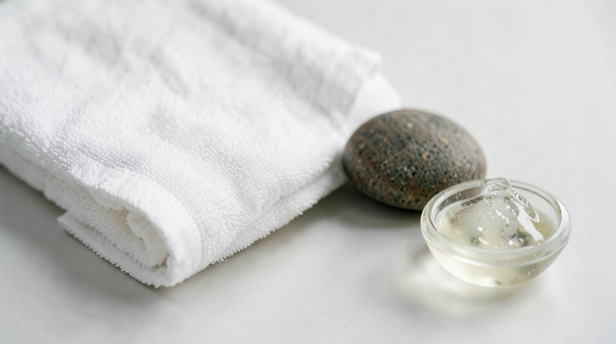
![Textural Still Life Study]()
Textural Still Life Study
Image credit : MyLifeXP Bureau
The small, persistent bumps that appear on the upper arms and sometimes the thighs of many people have a specific cause: a process called keratosis pilaris, in which keratin, the structural protein that makes up the outer skin layer, builds up inside individual hair follicles and forms a plug. The follicle opening becomes blocked, producing a tiny raised bump that feels rough to the touch and does not respond to ordinary moisturising because the plug is inside the follicle, not on the surface.
Keratosis pilaris is extremely common, tends to run in families, and is not a sign of poor hygiene or inadequate skincare. It often improves in warmer, more humid months and worsens in dry conditions, not because the season changes the underlying tendency, but because humidity affects how dry and rigid those keratin plugs become. Chemical exfoliants that work on the surface, particularly those containing lactic acid or urea, can soften the texture over time by loosening the bonds between dead cells. They do not remove the tendency, but they manage the buildup.
Why the Same Moisturiser Behaves Differently in Each Place
A humectant, an ingredient like glycerin or hyaluronic acid, works by drawing moisture from the environment or from deeper skin layers toward the surface. On the face, where the barrier is relatively intact and sebum is present, a humectant-rich product holds well. On the arms and legs, where the barrier is thinner and there is less natural oil to seal moisture in, a humectant alone often evaporates before it does much. The skin needs an occlusive on top, something with a heavier, wax-like or oil-based texture that slows water loss rather than simply attracting water. Shea butter, petrolatum, and plant oils behave this way. Applied to damp skin immediately after a shower, when the surface still holds some water, they trap that moisture before it escapes.
The face rarely needs this approach because its own sebum provides a partial occlusive effect. The legs and arms, lacking that, need the product to do the job instead.
Friction, Clothing, and the Texture You Build Over Time
The skin on the arms and legs is also subject to more mechanical friction than the face. Clothing rubs against it for most of the day. The backs of the arms press against chairs and desks. The shins and knees take knocks and abrasion that the face almost never does. Over time, skin that is repeatedly rubbed in one place thickens slightly, a protective response that increases roughness. The elbows and knees show this most clearly, where the skin becomes visibly thicker and often darker, because friction also stimulates melanin production in some people.
This is not damage in the way a wound is damage. It is the skin doing exactly what it is designed to do: building a tougher surface where the environment demands one. The face, protected by relative stillness and its own oil supply, never receives that signal and stays finer-grained as a result.
What This Means for How You Care for Both
Understanding the structural difference changes what you reach for. Gentle, humectant-forward products suit the face well because the barrier is already doing much of the work. For the arms and legs, particularly in dry months or after frequent bathing, the priority is occlusion, sealing moisture in rather than adding it. Applying a heavier lotion or body oil to skin that is still slightly damp is more effective than applying it to fully dry skin, because there is actual water present to trap.
Exfoliation helps on the body in a way it rarely needs to on the face, because slower cell turnover means more accumulation. A gentle physical exfoliant once or twice a week, or a body wash containing lactic acid or urea used regularly, reduces the roughness that comes from dead-cell buildup. For keratosis pilaris specifically, consistency matters more than intensity, a mild acid used regularly outperforms an aggressive scrub used occasionally, which can irritate without clearing the follicular plugs.
The texture difference between your face and your arms is not a problem to be solved so much as a structural reality to be worked with. The skin on your limbs was built for a harder job. It reflects that in how it feels.
Unlock insightful tips and inspiration on personal growth, productivity, and well-being. Stay motivated and updated with the latest at
My Life XP.