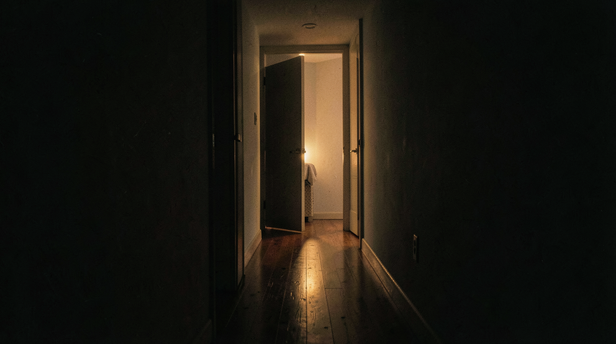
It happens on an ordinary evening. You lift them from the sofa, their body gone heavy the way only a sleeping child's body goes, all that warm, absolute weight, and you carry them down the hall. You lay them down. You pull the blanket up. You leave the room. You do not know, because there is no way to know, that you will never do this again.
Not because something goes wrong. Because they grow. Because one evening soon they will walk themselves to bed, and you will be glad, and you will not think to mark it.
The Last Time Hides Inside an Ordinary One
![When Children's Tiredness Signals Low Iron]()
When Children's Tiredness Signals Low Iron
Image credit : Freepik
Every milestone a child reaches is also the end of something smaller. The first time they climb the stairs alone, they stop needing to be carried up them. The first time they pour their own water, the small ritual of pouring it for them disappears. These endings are not sad in the moment, they are the whole point. You raised them toward exactly this. But they accumulate quietly, and one day you look back and realise the accumulation was enormous.
The carried-to-bed is one of the clearest examples because of what it requires: a child who cannot yet make it there alone, a body still small enough to lift, and a parent willing to do the lifting instead of waking them. All three conditions are temporary. They overlap for only a few years, and they end at different rates for different families, on different evenings, in different rooms.
No one sends a notification. The last time looks exactly like all the other times.
Why the Body Remembers What the Mind Lets Go
Parents often describe remembering the physical sensation of carrying a sleeping child long after the child is too old to be carried. The specific weight. The way the head settles into the curve of a neck. The particular angle of an arm hooked under small knees. The warmth of it.
This is not sentimentality. The body encodes repeated physical experiences differently from events. You carried that child dozens, possibly hundreds of times. The nervous system learned the weight, the balance, the adjustment needed when a sleeping child shifts. That learning does not erase when the carrying stops. It stays, filed under something the body knows and the mind cannot always reach.
Which is why the memory, when it surfaces, can feel so specific and so sudden. Not a general warmth about early parenthood, but the exact weight of that particular child on that particular shoulder, retrieved whole.
The Asymmetry That Makes It Ache
![Amber Light in Shadowed Hallway]()
Amber Light in Shadowed Hallway
Image credit : AI
The child does not know it was the last time either. They were asleep. They will have no memory of it at all, not that carrying, not the dozens before it. The whole experience, every one of those evenings, belongs entirely to the parent.
This asymmetry runs through a great deal of early parenting. The parent is the keeper of a record the child cannot yet make. The child will grow into someone who has no access to their own smallest years except through what the parent held onto and chose to tell. Every carried-to-bed that the parent remembers is a piece of the child's life that exists only because someone was awake for it.
That is not a burden. It is closer to a privilege, though it rarely feels like one at eleven at night with a back that is not what it was.
What You Cannot Do With This Knowledge
The impulse, once you understand that lasts are hidden inside ordinaries, is to try to catch them. To pay closer attention. To be more present. This is good advice in general and nearly useless for this specific thing, because the last carried-to-bed is only the last in retrospect. You cannot identify it on the evening it happens. You could carry them every night for the next year with full attention and still not know which one was final until a year after that.
What you can do is something quieter. Not vigilance, presence. The difference is that vigilance is braced for an ending, and presence is simply in the room. You are lifting them because they are heavy and asleep and the bed is warmer than the sofa. That is enough. That is actually the whole thing.
The parents who seem to carry these memories most fully are not the ones who were trying to memorise the moment. They are the ones who were simply there, doing the ordinary task without performing it.
The Lasts That Come Later
The carried-to-bed ends early, while they are still small. But the shape of it, the unannounced last, repeats across the whole of a child's growing up. The last time they reach for your hand in a crowd without thinking. The last time they call you from the other room just to know you are there. The last time they fall asleep in the car on the way home from somewhere and you sit in the driveway a few extra minutes, engine off, not wanting to break it.
Each one hides inside an ordinary evening. Each one is only visible from the far side.
The carried-to-bed is the earliest and the most physical, which is perhaps why it surfaces so often when parents of older children try to name the thing they miss most. It is not the sleeplessness they miss, or the constant need. It is the specific gravity of a sleeping child who trusted them completely, in the dark, on the way to bed.
That weight does not come back. But it does not entirely leave, either. The body filed it somewhere careful, and it stays.
Experiencing stress or misunderstandings in your relationship with your child? Your name energy may play a role. Check your name energy here. Unlock insightful tips and inspiration on personal growth, productivity, and well-being. Stay motivated and updated with the latest at
My Life XP.