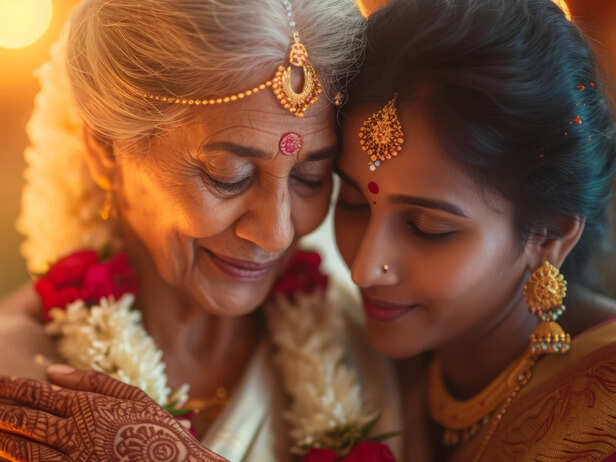
A woman gets married, leaves the house where she grew up and moves into a new home. Everyone celebrates this as a beautiful tradition, but very few people stop to ask what she might be feeling. Why is leaving her parents considered a normal part of marriage? Why does she sometimes need permission to visit her own family? And why is a man rarely expected to make the same sacrifice? Behind the rituals of marriage lies an uncomfortable question about gender equality, personal freedom and a woman's right to call a place her own.
Why Is Leaving Home Only Her Responsibility?
![A Bride Meeting Her In-Laws]()
A Bride Meeting Her In-Laws
Image credit : Freepik
For generations, Indian weddings have followed a familiar pattern: the bride leaves her parents' home and moves into her husband's family home. This moment is called bidaai and is often presented as an emotional but beautiful tradition. However, an uncomfortable question rarely gets asked: Why is the woman expected to leave everything familiar after marriage? Her childhood memories, personal space, neighbours and family relationships are suddenly placed behind her. Meanwhile, the groom usually continues living in his familiar environment. This unequal expectation deserves a serious conversation.
When Did Basic Freedom Become a Favour?
![Indian festivals are meant to bring families together]()
Indian festivals are meant to bring families together
Image credit : Freepik
Sometimes, married women describe their in-laws as wonderful because they are allowed to visit their parents whenever they want. But should visiting one's own family really be considered a special privilege? A woman should not have to feel grateful simply because nobody stops her from meeting her parents. Marriage does not take away her identity, relationships or freedom of movement. Yet, when ordinary choices are treated as favours, women can gradually begin accepting restrictions as normal. Respect should be the foundation of marriage, not something a woman has to earn.
Why Is Adjustment Always Expected From Women?
After marriage, women are often expected to adjust to a new household, its routines, food preferences, family expectations and traditions. They may be told to change their habits because that is how a good daughter-in-law behaves. But why is adjustment rarely discussed as an equal responsibility? A marriage brings two people together, so both should make space for each other's identities and comfort. When only one person is constantly expected to compromise, adjustment stops being a healthy part of a relationship and starts becoming an unequal burden.
Why Is Her Parental Home No Longer Hers?
One of the most painful assumptions is that a woman's parental home stops being her own after marriage. She may hear that her real home is now her husband's house, even though the place where she grew up holds a lifetime of memories. Some women hesitate before planning a visit because they worry about upsetting their in-laws or creating disagreements with their husbands. But marriage cannot erase the emotional connection a woman shares with her parents. She deserves to feel equally welcome in both homes without having to justify her presence.
Why Are Men Rarely Asked to Make the Same Sacrifice?
Imagine asking a newly married man to leave his parents, move into his wife's family home and follow an entirely different household routine. Such an arrangement may happen in some families, but it is still less common. The discomfort surrounding this idea reveals how deeply traditional gender roles shape marriage expectations. Women are often expected to adapt because society has treated it as their responsibility for generations. Equality does not mean every couple must follow the same living arrangement. It means both partners should have an equal say in deciding where and how they build their lives.
What Happens When Women Question These Traditions?
When women question traditional expectations, they may be labelled selfish, stubborn, modern or disrespectful. A woman who wants to live independently or maintain equal connections with both families can sometimes be accused of breaking her marriage. These labels can make it difficult for women to express their needs openly. However, questioning an unfair expectation does not mean rejecting family values. A healthy family should allow conversations about personal freedom, boundaries and mutual respect without turning every disagreement into a test of a woman's character.
What Should an Equal Marriage Look Like?
An equal marriage begins when both partners understand that neither person owns the other. Decisions about living arrangements, visiting parents, careers and household responsibilities should be made together. Families can also help by welcoming daughters after marriage without making them feel like visitors and by teaching sons to share responsibilities. Couples should discuss expectations before marriage instead of assuming that one person will automatically adjust. Most importantly, a woman's identity should remain intact after marriage. She deserves love, independence and the freedom to belong to both families.
Are relationship issues affecting your peace of mind? Your name energy may be playing a role. Check your name energy here!Unlock insightful tips and inspiration on personal growth, productivity, and well-being. Stay motivated and updated with the latest at
My Life XP.