The brass idol in the corner of the kitchen gets the first ladle of kheer before anyone else at the table. The door to the puja room is left ajar at night so the deity is not alone in the dark. A grandmother scolds the image of Krishna for being mischievous, then laughs, then folds her hands. To an outsider this looks like sentiment. To the person doing it, it is simply how the relationship works.
The Theological Root of a Domestic Feeling
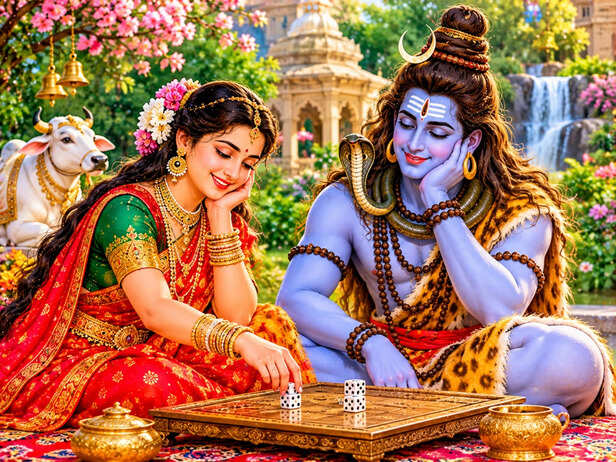
![Goddess Gauri and Lord Shiva Playing Dice]()
Goddess Gauri and Lord Shiva Playing Dice
Image credit : CHATGPT(AI)
In Vaishnava devotional traditions, the idea that a devotee can relate to the divine as a family member has a name and a structure. The Sanskrit term is
bhava, the emotional stance a devotee takes toward the deity, and the tradition identifies several of them. The stance of a servant toward a master is one. The stance of a friend is another. The stance of a parent toward a child, or a child toward a parent, is a third. Each is considered a legitimate way to approach the divine, and none is ranked above the others in warmth. What they share is that they are all relational. The tradition does not ask the devotee to dissolve into abstraction. It asks them to feel something specific toward someone specific.
This is the theological root of what looks, from the outside, like a grandmother arguing with a brass idol. She is not confused about what the idol is. She is practicing a particular kind of devotion that the tradition has named and honoured for centuries.
How the Home Shrine Became a Household
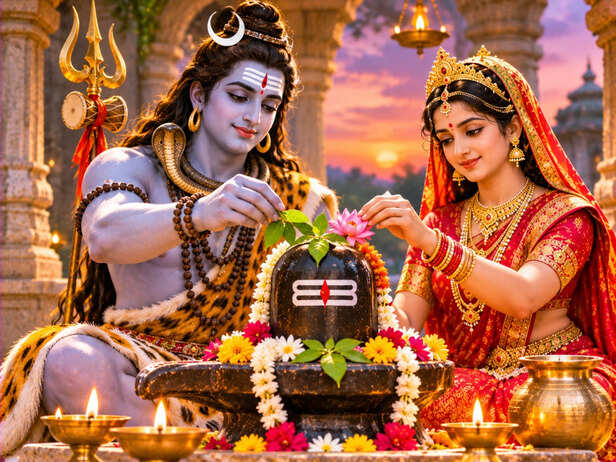
![Lord Shiva and Goddess Parvati During Pradosh Puja]()
Lord Shiva and Goddess Parvati During Pradosh Puja
The domestic worship of a deity, what is called
griha devata or household deity practice, carries this relational logic into the architecture of daily life. The deity is given a room or a corner. They are woken in the morning, offered water for washing, given food, dressed in fresh cloth, shown a lamp, and put to rest at night. This sequence mirrors the care given to a person in the house, and that is not accidental. In popular tradition, the deity is understood to dwell in the home as a presence, not merely to be visited there as an image.
The rituals are called
shodashopachara in formal temple worship, sixteen services offered to the deity as one would offer them to an honoured guest. When this practice moves into the home, the guest does not leave. Over generations, the guest becomes a resident. The resident becomes family.
The Specific Relationships Devotees Describe
Different traditions within Hinduism have cultivated different family relationships with different deities, and the specifics matter. In the devotional poetry of the Alvars and the Nayanmars, the relationship to Vishnu or Shiva is sometimes that of a lover, sometimes a child, sometimes a friend who has known you since before memory. In the Surdas tradition, Krishna is a child to be raised, the devotee becomes his foster mother, Yashoda, not metaphorically but emotionally and completely. The grief Yashoda feels when Krishna leaves Vrindavan is treated in this tradition as a real grief, not a symbol of one.
In many Bengali households, Durga is welcomed home for the five days of Navratri as a daughter returning from her husband's house. The immersion on the final day is mourned as a daughter's departure. Grown adults cry at the ghat. The relationship being felt is not symbolic at that moment, it is the actual feeling of a parent watching a child leave.
In South Indian traditions, the deity of the family shrine is often referred to simply as
our deity, inherited through the family line, present at births and deaths, consulted before decisions, thanked after outcomes. The deity knows the family's history because the deity has been in the room for all of it.
What the Familiarity Is Not
The intimacy that characterises this kind of devotion is sometimes mistaken for casualness, or for a reduction of the divine to the human scale. The tradition itself addresses this. The devotee who scolds Krishna knows, at the same time, that Krishna is the one who holds the universe in his mouth. The two things are held simultaneously, and the tradition considers this simultaneity the point. The intimacy is not a failure to understand the magnitude of what is being worshipped. It is a specific way of being in relationship with that magnitude, one that does not require distance to maintain respect.
This is why the grandmother who argues with the idol also prostrates before it. The argument and the prostration are not in contradiction. They are two registers of the same relationship, the way a person can be furious with a parent and devoted to them at the same time.
What Gets Passed Down
The family deity is one of the quieter forms of inheritance in Indian domestic life. A child grows up watching a grandparent speak to an idol the way they speak to no one else, with a particular mixture of demand and tenderness. The child learns, without being taught, that this is a relationship with a history. The idol has been in the family longer than anyone alive can remember. It was carried from another town, rescued from a flood, wrapped in cloth during a difficult migration. It has been present at deaths. It will be present at the next ones.
What the child inherits is not a theology, exactly. It is a way of being in the world that includes a specific presence at its centre, one that can be spoken to, complained to, thanked, and loved. The deity is a member of the family in the same way that the oldest member of the family is: through sheer duration, through having been there for everything, through being the one the house orients itself around.
The feeling a devotee is describing, when they use that phrase, is not a metaphor. It is a record of a long relationship, kept not in writing but in the daily repetition of small acts of care.
Unlock insightful tips and inspiration on personal growth, productivity, and well-being. Stay motivated and updated with the latest at
My Life XP.