Is Your Destiny Written by Karma or Directed by Dharma?
Noopur Kumari | Tue, 17 Feb 2026
This guide clearly explains the powerful spiritual connection between Karma and Dharma using simple and meaningful language. Rooted in sacred texts like the Bhagavad Gita and the Upanishads, it shows how your actions shape consequences and how your duty shapes destiny. When Karma and Dharma work together, inner peace naturally follows. Backed by traditional Hindu wisdom and practical spiritual insight, this article offers trustworthy guidance for anyone searching meaning of Karma and Dharma, life purpose, or spiritual law. If you seek clarity about destiny and moral responsibility, this is where understanding begins.

Karma and Dharma
Image credit : ChatGPT(AI)
Have you ever searched, What is the difference between Karma and Dharma? or How does Karma affect my life? These two powerful Sanskrit words hold the secret to understanding destiny, purpose, and spiritual growth. In ancient Hindu philosophy, Karma means action and its result, while Dharma means righteous duty and moral path. Together, they form the spiritual law that guides human life.
Rooted deeply in sacred texts like the Bhagavad Gita, the relationship between Karma and Dharma explains why things happen and how we should live wisely.
![The Ripple Effect in Water]()
Karma means action and reaction. Every thought, word, and deed creates an effect. Like a seed planted in soil, actions grow into future experiences. The Upanishads teach that nothing in life happens randomly. Good actions bring harmony. Harmful actions bring difficulty. Karma is not punishment. It is balance. When you understand Karma, you become more mindful. You realize that your choices shape your future. Awareness of this spiritual law helps you live responsibly and with compassion.
![A Warrior Standing with Purpose]()
Dharma means duty, righteousness, and moral responsibility. It defines your personal path according to your role in life. In the Bhagavad Gita, Lord Krishna teaches Arjuna to perform his Dharma with courage and faith. Dharma is not about comfort or convenience. It is about choosing what is right even when it feels difficult. A teacher guides with honesty. A parent protects with love. Spiritual texts and centuries of Hindu philosophy confirm that living your Dharma builds inner strength, clarity, and peace. When you align your actions with truth, your life moves in harmony with universal order and lasting purpose.
![Balanced Scale of Justice]()
When you act according to Dharma, your Karma becomes positive and pure. Dharma guides your actions. Karma records their results. If you ignore Dharma, negative Karma may follow. This spiritual connection teaches responsibility. It reminds us that intention matters as much as action. Acting selfishly creates suffering. Acting with integrity creates peace. The relationship between Karma and Dharma is like a compass and a path. Dharma shows direction. Karma measures the journey.
Many people wonder if Karma means destiny is fixed forever. Hindu philosophy gives a powerful and hopeful answer. Sacred texts like the Mahabharata teach that past actions influence present situations, but your current choices shape your future. This balance between Karma and free will is central to spiritual wisdom. You are not trapped by fate. By following your Dharma with awareness and integrity, you actively transform tomorrow’s outcomes. This teaching offers empowerment, not fear. If you search meaning of Karma and destiny in Hinduism, remember this truth. Conscious action today creates a stronger and wiser future.
When your actions align with your Dharma, inner peace becomes natural and steady. Confusion reduces because you are living according to moral responsibility and spiritual truth. Ancient scriptures such as the Bhagavad Gita teach that righteous action purifies Karma and leads the soul toward liberation. Dharma provides direction and purpose, while Karma ensures accountability for every thought and deed. This timeless wisdom, rooted in authentic Hindu philosophy, emphasizes integrity, discipline, and conscious living. If you are searching for the meaning of Karma and Dharma or how to find life purpose, this spiritual principle offers clarity, balance, and lasting freedom.
Unlock insightful tips and inspiration on personal growth, productivity, and well-being. Stay motivated and updated with the latest at My Life XP.
1. What is the main difference between Karma and Dharma?
Karma refers to action and its consequences, while Dharma means righteous duty and moral responsibility. Karma answers what you do and what returns to you. Dharma answers what you should do according to spiritual truth. Texts like the Bhagavad Gita clearly explain this relationship. Together, they guide ethical living and conscious choices.
2. Can following Dharma change my Karma?
Yes. When actions align with Dharma, Karma becomes positive and balanced. Righteous living purifies past tendencies and shapes better future outcomes. Spiritual discipline and awareness help transform life experiences.
3. Is Karma the same as destiny?
Karma influences destiny, but it does not remove free will. According to the Mahabharata, present actions create future results. You have the power to make better choices.
4. How can I discover my Dharma?
Understanding your responsibilities, values, and strengths helps reveal your Dharma. Self reflection, guidance from scripture, and ethical action bring clarity.
5. Why are Karma and Dharma important today?
They promote accountability, integrity, and purpose. In a modern world full of confusion, these ancient principles provide stability and moral direction.
Rooted deeply in sacred texts like the Bhagavad Gita, the relationship between Karma and Dharma explains why things happen and how we should live wisely.
Karma Is the Law of Action

The Ripple Effect in Water
Image credit : Freepik
Karma means action and reaction. Every thought, word, and deed creates an effect. Like a seed planted in soil, actions grow into future experiences. The Upanishads teach that nothing in life happens randomly. Good actions bring harmony. Harmful actions bring difficulty. Karma is not punishment. It is balance. When you understand Karma, you become more mindful. You realize that your choices shape your future. Awareness of this spiritual law helps you live responsibly and with compassion.
Dharma Is Your Sacred Duty
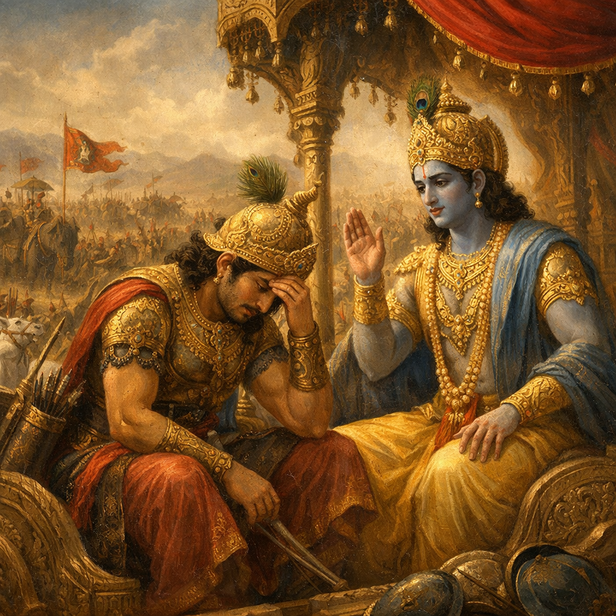
A Warrior Standing with Purpose
Image credit : ChatGPT(AI)
Dharma means duty, righteousness, and moral responsibility. It defines your personal path according to your role in life. In the Bhagavad Gita, Lord Krishna teaches Arjuna to perform his Dharma with courage and faith. Dharma is not about comfort or convenience. It is about choosing what is right even when it feels difficult. A teacher guides with honesty. A parent protects with love. Spiritual texts and centuries of Hindu philosophy confirm that living your Dharma builds inner strength, clarity, and peace. When you align your actions with truth, your life moves in harmony with universal order and lasting purpose.
Karma Follows Dharma

Balanced Scale of Justice
Image credit : Freepik
When you act according to Dharma, your Karma becomes positive and pure. Dharma guides your actions. Karma records their results. If you ignore Dharma, negative Karma may follow. This spiritual connection teaches responsibility. It reminds us that intention matters as much as action. Acting selfishly creates suffering. Acting with integrity creates peace. The relationship between Karma and Dharma is like a compass and a path. Dharma shows direction. Karma measures the journey.
Free Will and Destiny Work Together
Inner Peace Comes from Alignment
Unlock insightful tips and inspiration on personal growth, productivity, and well-being. Stay motivated and updated with the latest at My Life XP.
Frequently Asked Questions (FAQs)
Karma refers to action and its consequences, while Dharma means righteous duty and moral responsibility. Karma answers what you do and what returns to you. Dharma answers what you should do according to spiritual truth. Texts like the Bhagavad Gita clearly explain this relationship. Together, they guide ethical living and conscious choices.
2. Can following Dharma change my Karma?
Yes. When actions align with Dharma, Karma becomes positive and balanced. Righteous living purifies past tendencies and shapes better future outcomes. Spiritual discipline and awareness help transform life experiences.
3. Is Karma the same as destiny?
Karma influences destiny, but it does not remove free will. According to the Mahabharata, present actions create future results. You have the power to make better choices.
4. How can I discover my Dharma?
Understanding your responsibilities, values, and strengths helps reveal your Dharma. Self reflection, guidance from scripture, and ethical action bring clarity.
5. Why are Karma and Dharma important today?
They promote accountability, integrity, and purpose. In a modern world full of confusion, these ancient principles provide stability and moral direction.