The Hidden Reason Strong People Feel Drawn to Hanuman
Noopur Kumari | Tue, 05 May 2026
Strong people rarely seek support. They rely on themselves, push through challenges, and stay in control. Yet many of them feel a quiet, unexplained connection with Hanuman. Why? Because Hanuman doesn’t symbolize dependence he represents mastery over power. Strength without ego. Devotion without weakness. A balance most people struggle to achieve. This connection isn’t emotional it’s deeper. It reflects alignment between inner strength and purpose. And once you truly understand this… you stop seeing strength as force and start seeing it as control, clarity, and quiet power.

Hanuman
Image credit : ChatGPT(ai)
Why do people who seem strong still feel drawn to something greater? They are confident, focused, and disciplined They handle pressure, make decisions, and keep moving forward. Yet, many of them quietly connect with Hanuman. Not out of fear. Not out of weakness. But because strength alone is not enough. Real strength looks for direction, balance, and control. Hanuman represents all of that power with humility, courage with purpose. He doesn’t take away strength, he refines it. And that’s why strong people don’t resist this connection they understand it.
![Hanuman Sitting Calmly in Strength]()
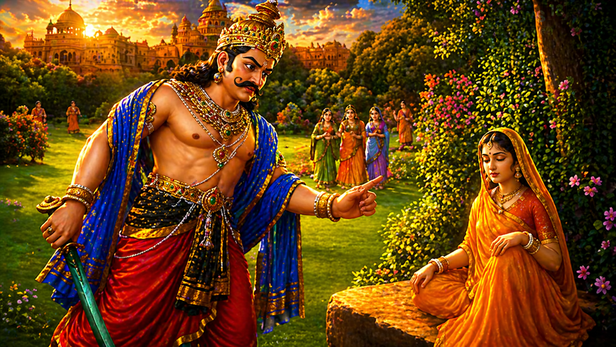
Ravana ruled a golden kingdom, had unmatched knowledge, and immense power. From the outside, he looked unstoppable. But Hanuman saw what others couldn’t his foundation was weak. Success without alignment to truth is temporary. Many people today chase wealth and status, believing it guarantees security. But just like Ravana, when success is built against righteousness, it becomes fragile. The illusion breaks suddenly. Hanuman’s warning reminds us that external victories mean nothing if they disconnect us from deeper values and spiritual truth.
![The strongest are those who can bow]()
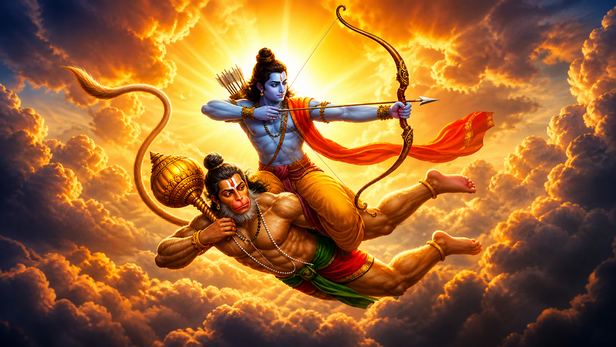
Hanuman uses the word “Vimukh” someone who turns away from Ram. This isn’t just about devotion; it’s about direction. When a person chooses ego, arrogance, or wrong paths, they slowly move away from truth. The danger is subtle. Everything may look fine at first. But internally, stability weakens. Hanuman clearly says that no one not even powerful forces can protect such a person. It’s a strong reminder that the biggest risk in life is not failure, but choosing a path that disconnects us from what is right.
Hanuman compares unstable success to a river without a source. It may flow during rain, but it dries quickly. This metaphor is powerful. Many achievements today are like that temporary, dependent on external conditions. True strength comes from a deeper source, like values, faith, and purpose. Without that, even the biggest empires collapse. Ravana’s Lanka looked permanent, but it wasn’t. This teaches us that sustainability matters more than speed. What we build should have roots, not just shine on the surface.
Hanuman also reveals hope. He says even someone on the wrong path can find salvation by sincerely taking Ram’s name. This is powerful because it removes the idea of “too late.” No matter how far someone has gone, a genuine shift can change everything. It’s not about rituals or perfection it’s about honesty. One real moment of surrender can break years of negativity. This idea makes spirituality accessible. It tells us transformation doesn’t need time it needs truth.
Ravana heard Hanuman’s words, but he didn’t accept them. That was his real mistake. Often, life gives warnings through people, situations, or inner voice. But ego blocks understanding. Ravana believed his power was enough. He underestimated the principle Hanuman explained. And that led to his downfall. This shows that knowledge alone isn’t enough acceptance matters. Many people today repeat the same mistake, ignoring signs until it’s too late. Hanuman’s message is clear: truth doesn’t force itself, but ignoring it has consequences.
Start by observing your direction, not just your progress. Ask yourself if your actions align with truth and values. Practice humility, because ego is the first step toward being “Vimukh.” Take a few moments daily to connect with something higher through prayer, reflection, or silence. Don’t wait for a crisis to change. Even a small step toward the right path creates a big shift. Most importantly, stay aware. Because the biggest changes don’t happen outside they begin within.
Unlock insightful tips and inspiration on personal growth, productivity, and well-being. Stay motivated and updated with the latest at My Life XP.
1. Why do strong people feel connected to Hanuman?
Because Hanuman represents controlled power, discipline, and humility. Strong individuals see these qualities as essential for real growth and stability.
2. Is devotion to Hanuman a sign of weakness?
No. In this context, devotion reflects clarity and purpose. It’s about aligning strength with values, not giving it up.
3. What makes Hanuman different from other deities?
Hanuman is known for combining immense strength with complete humility and self-control. This balance makes him relatable to people focused on personal growth.
4. How does Hanuman symbolize discipline?
His actions show focus, consistency, and restraint. He used his strength only when necessary and always with purpose.
5. Can non-religious people also relate to this idea?
Yes. Even without a religious lens, Hanuman represents qualities like resilience, mental strength, and emotional control—values anyone can connect with.
6. What lesson can we learn from this connection?
True strength is not just about power. It’s about how well you control it, direct it, and use it responsibly.
When Success Becomes an Illusion
Hanuman Sitting Calmly in Strength
Image credit : ChatGPT (AI)
Ravana ruled a golden kingdom, had unmatched knowledge, and immense power. From the outside, he looked unstoppable. But Hanuman saw what others couldn’t his foundation was weak. Success without alignment to truth is temporary. Many people today chase wealth and status, believing it guarantees security. But just like Ravana, when success is built against righteousness, it becomes fragile. The illusion breaks suddenly. Hanuman’s warning reminds us that external victories mean nothing if they disconnect us from deeper values and spiritual truth.
The Dangerous Cost of Being “Vimukh”
The strongest are those who can bow
Image credit : ChatGPT (ai)
Hanuman uses the word “Vimukh” someone who turns away from Ram. This isn’t just about devotion; it’s about direction. When a person chooses ego, arrogance, or wrong paths, they slowly move away from truth. The danger is subtle. Everything may look fine at first. But internally, stability weakens. Hanuman clearly says that no one not even powerful forces can protect such a person. It’s a strong reminder that the biggest risk in life is not failure, but choosing a path that disconnects us from what is right.
Why Wealth Without Roots Never Lasts
One Name Can Change Everything
The Truth Ravana Ignored
Actionable Steps You Can Apply Today
Unlock insightful tips and inspiration on personal growth, productivity, and well-being. Stay motivated and updated with the latest at My Life XP.
Frequently Asked Questions (FAQs)
Because Hanuman represents controlled power, discipline, and humility. Strong individuals see these qualities as essential for real growth and stability.
2. Is devotion to Hanuman a sign of weakness?
No. In this context, devotion reflects clarity and purpose. It’s about aligning strength with values, not giving it up.
3. What makes Hanuman different from other deities?
Hanuman is known for combining immense strength with complete humility and self-control. This balance makes him relatable to people focused on personal growth.
4. How does Hanuman symbolize discipline?
His actions show focus, consistency, and restraint. He used his strength only when necessary and always with purpose.
5. Can non-religious people also relate to this idea?
Yes. Even without a religious lens, Hanuman represents qualities like resilience, mental strength, and emotional control—values anyone can connect with.
6. What lesson can we learn from this connection?
True strength is not just about power. It’s about how well you control it, direct it, and use it responsibly.