The Secret Vishnu Temples Hidden in Thanjavur’s Shadow of Brihadishwara
Noopur Kumari | Tue, 24 Feb 2026
When people hear Thanjavur, they think of the mighty Brihadishwara Temple built by Rajaraja Chola I. But just a short distance away, near the Vennar River, stands a quieter spiritual treasure a Divya Desam where Vishnu appears in three sacred forms. Known collectively as Thanjai Mamani Kovil, these shrines are praised by Azhvars and hold centuries of devotion. Few tourists notice them. Yet, for true seekers, this sacred cluster offers a rare chance to witness Vishnu in three divine manifestations in one holy space.

Vishnu
Image credit : ChatGPT(ai)
Thanjavur is often called the heart of the Chola empire. Its skyline is dominated by the magnificent Brihadishwara Temple, a UNESCO World Heritage marvel. Thousands visit it every year. But devotion in Thanjavur did not begin or end with the Cholas. Near Vennatrankarai, close to the River Vennar a branch of the sacred Kaveri lies an ancient Vaishnavite kshetram. This sacred space is one among the 108 Divya Desams praised in Tamil Pasurams by the Azhvars. What makes it extraordinary is simple yet powerful: Vishnu appears here in three distinct forms, each with its own story, name, and emotional meaning. Let us walk into this lesser-known spiritual jewel.
![Entrance of Thanjai Mamani Kovil]()
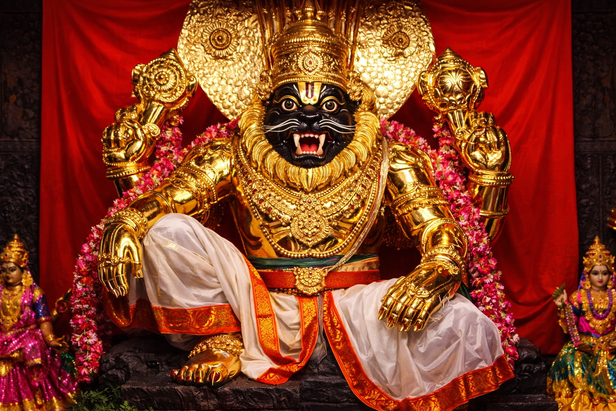
Thanjai Mamani Kovil is one of the three shrines grouped under this Divya Desam. Here, Vishnu appears as Neelamegha Perumal, radiating calm protection. Devotees believe he safeguards the city just as the Cholas once did. Praised by Bhudat Azhvar, this shrine reflects simplicity over grandeur. The temple’s peaceful atmosphere contrasts with the towering Brihadishwara nearby. Worship here feels intimate. The deity stands as a reminder that divine protection does not need massive walls only unwavering faith.
At the Manikunra Perumal shrine, Vishnu manifests as a powerful yet compassionate form. Nammazhvar sang in praise of this deity, calling devotees to surrender with love. The name “Manikunra” suggests a jewel-like hill steady and radiant. Though the structure is modest, its spiritual depth is immense. Devotees pray here for courage and mental clarity. In a city known for royal architecture, this shrine whispers a different message: true strength lies within the soul, not in stone monuments.
![Narasimha Perumal Idol]()
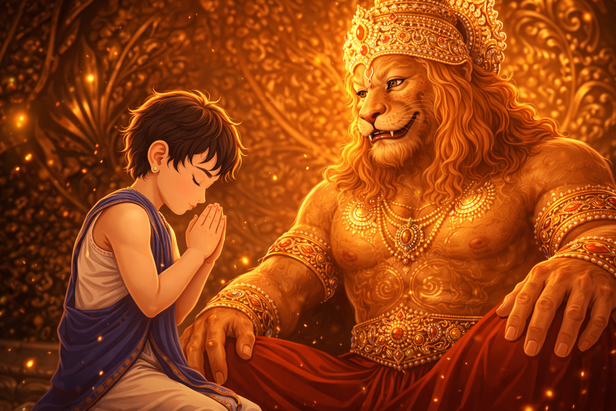
The third shrine houses Narasimha Perumal, the fierce incarnation of Vishnu. This form represents protection against injustice and fear. Thirumangai Azhvar praised this Divya Desam, highlighting its spiritual intensity. Narasimha’s presence balances compassion with power. Devotees believe he removes obstacles swiftly. Standing before this deity evokes awe and surrender. In one sacred cluster, Vishnu reveals calm protection, inner strength, and fierce guardianship a complete spiritual journey for devotees.
Historical accounts suggest that these shrines were originally located elsewhere and were relocated to Vennatrankarai in the 18th century. During the reign of Maratha ruler Thulja (1763–1787 CE), the temples were re-established in their present form. This relocation preserved the Divya Desam tradition in Thanjavur. The story shows how dynasties changed from Cholas to Marathas yet devotion remained constant. The temples stand today as living proof that faith survives political shifts and historical transitions.
![Painting of the Azhvars in Devotion]()
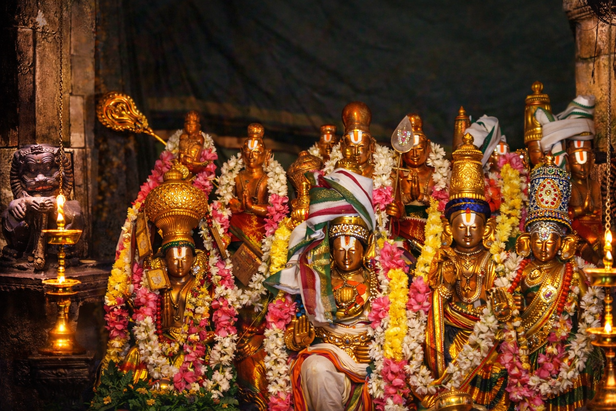
Three great Azhvars Bhudat Azhvar, Nammazhvar, and Thirumangai Azhvar sang Pasurams praising this Divya Desam. Their verses transformed these shrines into spiritually celebrated destinations. Being one among the 108 Divya Desams gives this kshetram immense importance in Sri Vaishnavism. Devotees believe visiting here grants blessings equivalent to visiting multiple sacred sites. The hymns continue to be recited, connecting today’s pilgrims with centuries of devotion. It is not only a temple cluster it is living poetry carved in stone.
The Sacred
Thanjavur will always be famous for Brihadishwara Temple and the glory of Rajaraja Chola. But just a short walk away stands another treasure quieter, older in spirit, and deeply devotional. The three Vishnu shrines of Thanjai Mamani Kovil remind us that history is not only written in grand towers. It is also preserved in hymns, faith, and sacred memory. For those who seek more than monuments for those who seek meaning this Divya Desam offers a rare blessing: three forms of Vishnu, one sacred space, and centuries of uninterrupted devotion. Next time you visit Thanjavur, look beyond the tallest tower. The real spiritual jewel may be waiting silently by the river.
Unlock insightful tips and inspiration on personal growth, productivity, and well-being. Stay motivated and updated with the latest at My Life XP.
1. What are the three Vishnu temples in Thanjavur’s Divya Desam?
The three shrines together are known as Thanjai Mamani Kovil Divya Desam in Thanjavur. The presiding deities are Neelamegha Perumal (Thanjai Mamani Kovil), Manikunra Perumal, and Narasimha Perumal. Though they are three separate temples, they are counted as one among the 108 Divya Desams in Sri Vaishnava tradition.
2. Where are these temples located?
These shrines are located near Vennatrankarai, close to the River Vennar, a branch of the River Kaveri. They are situated not far from the famous Brihadishwara Temple, making them easily accessible for pilgrims visiting Thanjavur.
3. Why are these temples considered special?
They are one of the 108 Divya Desams sacred Vishnu temples praised in Tamil hymns (Pasurams) by the Azhvars. What makes this site unique is that three different forms of Vishnu are worshipped within one Divya Desam cluster.
4. Which Azhvars have sung about this Divya Desam?
Three great saints Bhudat Azhvar, Nammazhvar, and Thirumangai Azhvar have sung in praise of these temples. Their Pasurams give the kshetram high spiritual importance in Vaishnavite tradition.
5. Were these temples always in the same location?
Historical accounts suggest that the temples were relocated to their present site during the 18th century under the Maratha ruler Thulja (1763–1787 CE). This helped preserve the sacred tradition in Thanjavur.
Thanjai Mamani Kovil: The Divine Protector
Entrance of Thanjai Mamani Kovil
Image credit : ChatGPT(ai)
Thanjai Mamani Kovil is one of the three shrines grouped under this Divya Desam. Here, Vishnu appears as Neelamegha Perumal, radiating calm protection. Devotees believe he safeguards the city just as the Cholas once did. Praised by Bhudat Azhvar, this shrine reflects simplicity over grandeur. The temple’s peaceful atmosphere contrasts with the towering Brihadishwara nearby. Worship here feels intimate. The deity stands as a reminder that divine protection does not need massive walls only unwavering faith.
Manikunra Perumal: The Lord of Inner Strength
Narasimha Perumal: The Fierce Compassion
Narasimha Perumal Idol
Image credit : ChatGPT(ai)
The third shrine houses Narasimha Perumal, the fierce incarnation of Vishnu. This form represents protection against injustice and fear. Thirumangai Azhvar praised this Divya Desam, highlighting its spiritual intensity. Narasimha’s presence balances compassion with power. Devotees believe he removes obstacles swiftly. Standing before this deity evokes awe and surrender. In one sacred cluster, Vishnu reveals calm protection, inner strength, and fierce guardianship a complete spiritual journey for devotees.
A Temple Moved by Time: The Maratha Relocation
The Azhvars’ Blessing: A Divya Desam of Eternal Praise
Painting of the Azhvars in Devotion
Image credit : ChatGPT (ai)
Three great Azhvars Bhudat Azhvar, Nammazhvar, and Thirumangai Azhvar sang Pasurams praising this Divya Desam. Their verses transformed these shrines into spiritually celebrated destinations. Being one among the 108 Divya Desams gives this kshetram immense importance in Sri Vaishnavism. Devotees believe visiting here grants blessings equivalent to visiting multiple sacred sites. The hymns continue to be recited, connecting today’s pilgrims with centuries of devotion. It is not only a temple cluster it is living poetry carved in stone.
The Sacred Secret Beside a World Wonder
Unlock insightful tips and inspiration on personal growth, productivity, and well-being. Stay motivated and updated with the latest at My Life XP.
Frequently Asked Questions (FAQs)
The three shrines together are known as Thanjai Mamani Kovil Divya Desam in Thanjavur. The presiding deities are Neelamegha Perumal (Thanjai Mamani Kovil), Manikunra Perumal, and Narasimha Perumal. Though they are three separate temples, they are counted as one among the 108 Divya Desams in Sri Vaishnava tradition.
2. Where are these temples located?
These shrines are located near Vennatrankarai, close to the River Vennar, a branch of the River Kaveri. They are situated not far from the famous Brihadishwara Temple, making them easily accessible for pilgrims visiting Thanjavur.
3. Why are these temples considered special?
They are one of the 108 Divya Desams sacred Vishnu temples praised in Tamil hymns (Pasurams) by the Azhvars. What makes this site unique is that three different forms of Vishnu are worshipped within one Divya Desam cluster.
4. Which Azhvars have sung about this Divya Desam?
Three great saints Bhudat Azhvar, Nammazhvar, and Thirumangai Azhvar have sung in praise of these temples. Their Pasurams give the kshetram high spiritual importance in Vaishnavite tradition.
5. Were these temples always in the same location?
Historical accounts suggest that the temples were relocated to their present site during the 18th century under the Maratha ruler Thulja (1763–1787 CE). This helped preserve the sacred tradition in Thanjavur.