What Hanuman Said About His Divine Form Will Surprise You
Noopur Kumari | Thu, 14 May 2026
Ancient Hindu traditions describe every Yuga with a different divine colour white in Satya Yuga, red in Treta Yuga, yellow in Dwapar Yuga, and black in Kali Yuga. But these colours may represent far more than appearance. They may symbolize the changing condition of dharma, human consciousness, energy, purity, and spiritual connection across time. From Hanuman’s Virat Roop to Krishna’s Pitambar form and the mysterious dark symbolism of Kali Yuga, many hidden clues appear connected through colour. Could these shades reveal how humanity slowly moved away from spiritual balance? And why does darkness appear strongest in the final Yuga before Kalki arrives?

Hindu scriptures repeatedly describe divine
Image credit : ChatGPT(ai)
Why is one Yuga connected to white, another to red, then yellow, and finally black? Why do Hindu scriptures repeatedly describe divine forms using colours that seem deeply symbolic? And why are powerful deities like Hanuman, Krishna, Kali, and even the Shivling connected to darker shades in Kali Yuga? Many people hear these stories but never stop to ask what these colours truly represent. Because in Sanatan Dharma, colours are not decoration. They are signals. Each shade points toward the spiritual condition of humanity during that Yuga. And once you begin connecting these colours together, an entirely different understanding of the four Yugas begins to emerge.
![Divine White Light of Satya Yuga]()
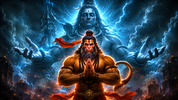
In Satya Yuga, dharma stood firmly on all four legs, meaning truth and righteousness completely guided humanity. Scriptures often connect this age with the colour white because it symbolised purity, peace, wisdom, and spiritual clarity. Many saints believe this white light represents the highest form of consciousness where humans lived close to divine truth without confusion or ego. Some traditions even connect this symbolism with Narayan’s Hansa avatar, which also represents wisdom and purity. In this age, humanity needed fewer external signs because inner spirituality was naturally awakened. White was not simply a colour it reflected the untouched state of the human soul.
![Red Glow of Treta Yuga]()
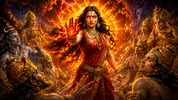
As humanity entered Treta Yuga, dharma weakened slightly, and people became more connected to action, power, and worldly responsibilities. This Yuga is often linked with the colour red, which symbolises energy, sacrifice, emotion, and strength. Many devotees connect this red symbolism to the divine Shakti of Narayan and the era of Rama. Red also reflects blood, war, duty, and sacrifice all major themes seen throughout the Ramayana. Some spiritual thinkers believe humanity slowly moved from pure inner consciousness toward external struggles during this age. The colour red became a reflection of both devotion and rising human intensity together.
![Golden Yellow Aura of Krishna]()
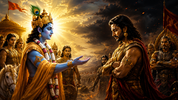
Dwapar Yuga introduced an age where morality became increasingly complicated. Dharma stood on only two legs, and humans struggled between truth and ambition. This era is often represented by yellow, a colour associated with intelligence, learning, politics, and divine wisdom. Krishna is famously called Pitambar because of his yellow garments, even though his complexion is described as dark like rain clouds. This contrast itself feels symbolic wisdom shining inside an increasingly confused world. The Mahabharata showed how humans had become spiritually divided, where even righteousness required strategy, diplomacy, and difficult choices to survive against growing darkness.
Kali Yuga is often associated with black because this age represents confusion, ego, greed, conflict, and spiritual disconnection. But darkness in Hindu philosophy does not always mean evil. Sometimes it symbolises mystery, hidden truth, and the unknown depths of existence. Powerful forms like Kali, dark Shivlings, and Jagannath carry this deep symbolism. Many spiritual teachers believe humanity in Kali Yuga has become externally advanced but internally restless. The black colour reflects a world where divine truth still exists, but people struggle harder than ever before to recognise and reconnect with it spiritually.
Stories about Hanuman often reveal that divine power is controlled by humility. When asked to show his Virat Roop again, Hanuman is believed to have said such forms are not displayed without purpose because humans can lose themselves in fear, pride, or illusion. This idea connects deeply with the Yugas themselves. As humanity changes spiritually, divine power appears differently according to what people can handle and understand. Perhaps that is why each Yuga carries its own colour, energy, and symbolism. The deeper message may not be about appearances at all but about humanity’s changing ability to perceive divinity itself.
Unlock insightful tips and inspiration on personal growth, productivity, and well-being. Stay motivated and updated with the latest at My Life XP.
What is Hanuman’s Virat Roop?
Hanuman’s Virat Roop is his gigantic cosmic form that represents unlimited divine strength and spiritual energy.
Why did Hanuman avoid showing his divine form?
Many spiritual stories suggest Hanuman believed divine power should only appear when truly necessary, not for pride or display.
Did Hanuman show his Virat Roop in the Ramayana?
Yes. Hanuman revealed powerful forms during important moments, especially while serving Rama and protecting dharma.
What does Hanuman’s giant form symbolise?
It symbolises fearlessness, devotion, protection, humility, and the limitless power of bhakti.
Why are devotees fascinated by Hanuman’s divine form?
Because his Virat Roop represents the idea that true strength comes from devotion, not ego or domination.
White Was the Colour of Pure Consciousness
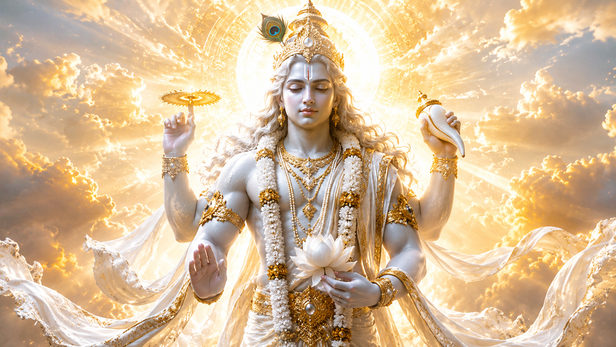
Divine White Light of Satya Yuga
Image credit : chatgpt(ai)
In Satya Yuga, dharma stood firmly on all four legs, meaning truth and righteousness completely guided humanity. Scriptures often connect this age with the colour white because it symbolised purity, peace, wisdom, and spiritual clarity. Many saints believe this white light represents the highest form of consciousness where humans lived close to divine truth without confusion or ego. Some traditions even connect this symbolism with Narayan’s Hansa avatar, which also represents wisdom and purity. In this age, humanity needed fewer external signs because inner spirituality was naturally awakened. White was not simply a colour it reflected the untouched state of the human soul.
Treta Yuga Introduced the Fire of Action
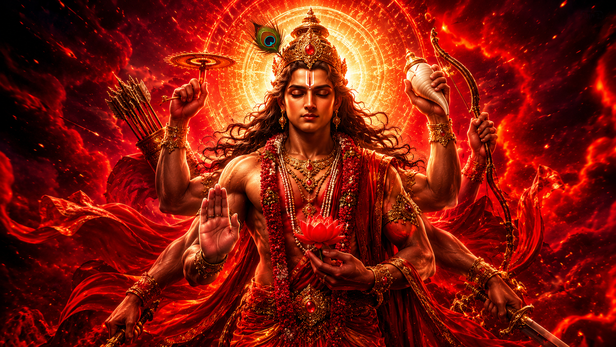
Red Glow of Treta Yuga
Image credit : chatgpt(ai)
As humanity entered Treta Yuga, dharma weakened slightly, and people became more connected to action, power, and worldly responsibilities. This Yuga is often linked with the colour red, which symbolises energy, sacrifice, emotion, and strength. Many devotees connect this red symbolism to the divine Shakti of Narayan and the era of Rama. Red also reflects blood, war, duty, and sacrifice all major themes seen throughout the Ramayana. Some spiritual thinkers believe humanity slowly moved from pure inner consciousness toward external struggles during this age. The colour red became a reflection of both devotion and rising human intensity together.
Dwapar Yuga Carried the Colour of Complexity
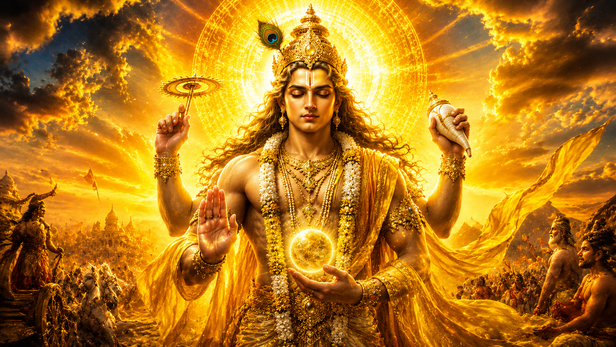
Golden Yellow Aura of Krishna
Image credit : ChatGPT(ai)
Dwapar Yuga introduced an age where morality became increasingly complicated. Dharma stood on only two legs, and humans struggled between truth and ambition. This era is often represented by yellow, a colour associated with intelligence, learning, politics, and divine wisdom. Krishna is famously called Pitambar because of his yellow garments, even though his complexion is described as dark like rain clouds. This contrast itself feels symbolic wisdom shining inside an increasingly confused world. The Mahabharata showed how humans had become spiritually divided, where even righteousness required strategy, diplomacy, and difficult choices to survive against growing darkness.
Kali Yuga Reflects Spiritual Darkness
Hanuman’s Virat Form Reveals a Hidden Truth
Unlock insightful tips and inspiration on personal growth, productivity, and well-being. Stay motivated and updated with the latest at My Life XP.
Frequently Asked Questions (FAQs)
Hanuman’s Virat Roop is his gigantic cosmic form that represents unlimited divine strength and spiritual energy.
Why did Hanuman avoid showing his divine form?
Many spiritual stories suggest Hanuman believed divine power should only appear when truly necessary, not for pride or display.
Did Hanuman show his Virat Roop in the Ramayana?
Yes. Hanuman revealed powerful forms during important moments, especially while serving Rama and protecting dharma.
What does Hanuman’s giant form symbolise?
It symbolises fearlessness, devotion, protection, humility, and the limitless power of bhakti.
Why are devotees fascinated by Hanuman’s divine form?
Because his Virat Roop represents the idea that true strength comes from devotion, not ego or domination.