What Happens When You Say Swaha During a Ritual?
Noopur Kumari | Jun 15, 2026, 08:00 IST
The secret of Hindu mantras does not lie only in the words themselves. It also lies in how they end. Words such as Swaha, Namah, Hum, and Phat are not random additions. They act like spiritual commands, guiding the energy of the mantra toward a specific purpose. Whether it is devotion, protection, offering, or transformation, these sacred endings complete the mantra's journey and unlock its intended power.

Have you ever noticed that many Hindu mantras end with words like "Swaha," "Namah," "Hum," or "Phat"? Most people chant these sacred words without ever wondering what they actually mean. But what if these words are not just endings? What if they are the most important part of the mantra? Ancient sages believed that a mantra is not complete until its final sound is spoken. In fact, the last word of a mantra determines where its energy is directed and how its spiritual power is released. Once you understand this hidden principle, you will never hear a mantra the same way again.
![Where the Mantra Sends Its Power]()
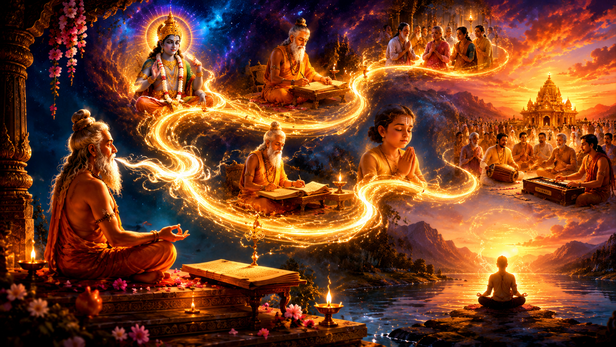
Most people think a mantra is simply a collection of sacred words. However, ancient spiritual traditions describe a mantra as a living vibration. Every syllable builds momentum, much like drawing a bowstring before releasing an arrow. The mantra gathers focus, intention, and spiritual energy as it is chanted. Yet this energy remains incomplete until the final sound is spoken. That ending acts as a release point, directing the accumulated force toward its purpose. Understanding this transforms mantra chanting from a routine practice into a conscious spiritual experience filled with meaning and intention.
![The Fire of Divine Offering]()
Ancient mantra traditions teach that the final word of a mantra is known as its "Mantra Iti," meaning the conclusion or completion of the mantra. This ending is not merely symbolic. It serves as the point where the mantra's energy is released and guided. Imagine aiming an arrow after drawing it with full force. The direction you choose determines where it lands. In the same way, the ending word directs the vibration generated by the mantra. Without this final instruction, the spiritual intention of the mantra remains incomplete and unresolved.
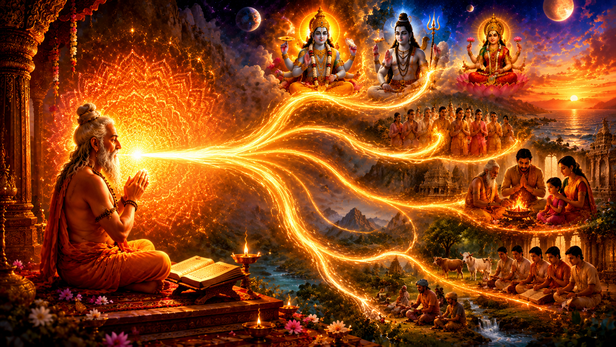
Among all mantra endings, "Swaha" is perhaps the most familiar. It is commonly heard during fire rituals and havans. When a devotee says "Swaha," it signifies offering something to the divine through the sacred fire. The word represents complete surrender and dedication. It is believed to carry the offering and intention to the deity being worshipped. This is why priests chant "Swaha" at the precise moment an offering enters the fire. The word acts as a spiritual bridge between the physical act of giving and the unseen realm of divine acceptance.
Unlike "Swaha," which is connected to offerings, words like "Hum" and "Phat" are traditionally associated with protection and energy projection. These powerful sounds are often found in mantras used for spiritual strength and safeguarding. Ancient practitioners believed that such endings create a protective boundary around the devotee while also removing negative influences. Their sharp and forceful vibrations are intentionally designed to produce a sense of spiritual authority. This is why these endings are frequently used in tantric and protective mantras where strength and energetic protection are important.
The word "Namah" is one of the most widely used mantra endings in Hindu worship. It is commonly translated as "I bow" or "I offer my respect." However, its deeper meaning goes beyond a physical gesture. Namah represents surrender of the ego before the divine. When devotees chant "Om Namah Shivaya," they are not simply greeting Lord Shiva. They are expressing humility, devotion, and a willingness to align themselves with a higher truth. This simple word carries a profound message that true spiritual growth begins with reverence and surrender.
Ancient sages did not choose mantra endings randomly. According to traditional teachings, each sound was selected based on its vibration, frequency, and spiritual effect. Different sounds produce different energetic responses within the mind and body. Over centuries of observation and practice, specific endings became associated with particular spiritual purposes. Some encouraged devotion, others supported protection, while some were linked to offerings and transformation. This careful selection reflects the depth of understanding that ancient spiritual traditions had regarding sound, consciousness, and the subtle effects of vibration.
The next time you hear a mantra ending with Swaha, Namah, Hum, or Phat, pause for a moment and listen carefully. What may sound like a simple concluding word is actually carrying out a vital spiritual function. It is directing, releasing, and completing the energy generated throughout the chant. These endings reveal that every mantra is more than a prayer it is a carefully designed spiritual process. The final sound is not the end of the mantra. In many ways, it is the moment when the mantra truly begins its work.
Unlock insightful tips and inspiration on personal growth, productivity, and well-being. Stay motivated and updated with the latest at My Life XP.
1. What does "Swaha" mean in Hindu mantras?
"Swaha" is primarily used during fire rituals and signifies offering or surrendering something to a deity through the sacred fire.
2. Why do some mantras end with "Phat"?
"Phat" is traditionally associated with protection, removal of obstacles, and directing spiritual energy.
3. What is the meaning of "Namah"?
"Namah" means "I bow" or "I offer my respects." It represents humility, devotion, and surrender to the divine.
4. What does "Hum" signify in a mantra?
"Hum" is often connected with protection, inner strength, and creating a spiritual shield against negative influences.
5. Are mantra ending words important?
Yes. Traditional mantra teachings consider these ending words essential because they help direct and complete the energy generated by the mantra.
A Mantra Is More Than Just Words
Where the Mantra Sends Its Power
Most people think a mantra is simply a collection of sacred words. However, ancient spiritual traditions describe a mantra as a living vibration. Every syllable builds momentum, much like drawing a bowstring before releasing an arrow. The mantra gathers focus, intention, and spiritual energy as it is chanted. Yet this energy remains incomplete until the final sound is spoken. That ending acts as a release point, directing the accumulated force toward its purpose. Understanding this transforms mantra chanting from a routine practice into a conscious spiritual experience filled with meaning and intention.
The Hidden Role of the Final Word
The Fire of Divine Offering
Ancient mantra traditions teach that the final word of a mantra is known as its "Mantra Iti," meaning the conclusion or completion of the mantra. This ending is not merely symbolic. It serves as the point where the mantra's energy is released and guided. Imagine aiming an arrow after drawing it with full force. The direction you choose determines where it lands. In the same way, the ending word directs the vibration generated by the mantra. Without this final instruction, the spiritual intention of the mantra remains incomplete and unresolved.
Why "Swaha" Is Used in Sacred Offerings
The Protective Power of "Hum" and "Phat"
The Meaning Behind "Namah"
How Ancient Sages Chose These Sounds
The Secret Hidden in Every Chant
Unlock insightful tips and inspiration on personal growth, productivity, and well-being. Stay motivated and updated with the latest at My Life XP.
Frequently Asked Questions (FAQs)
"Swaha" is primarily used during fire rituals and signifies offering or surrendering something to a deity through the sacred fire.
2. Why do some mantras end with "Phat"?
"Phat" is traditionally associated with protection, removal of obstacles, and directing spiritual energy.
3. What is the meaning of "Namah"?
"Namah" means "I bow" or "I offer my respects." It represents humility, devotion, and surrender to the divine.
4. What does "Hum" signify in a mantra?
"Hum" is often connected with protection, inner strength, and creating a spiritual shield against negative influences.
5. Are mantra ending words important?
Yes. Traditional mantra teachings consider these ending words essential because they help direct and complete the energy generated by the mantra.