Why Humans Have Always Looked to the Sky for Answers
Srota Swati Tripathy | MyLifeXP Bureau | Wed, 17 Dec 2025
Humans have always looked to the sky for answers because it offered guidance, meaning, and emotional comfort long before science existed. From survival and navigation to myths, science, and personal reflection, the sky shaped human curiosity and humility. Even today, it remains a source of wonder, perspective, and inner connection.

Looking to the Sky for Answers
( Image credit : Freepik )
On nights when sleep refuses to come, I often find myself staring at the sky. Even from a crowded city, where stars struggle to pierce through artificial light, something above still pulls at the human mind. It’s a quiet instinct older than language, older than written history. Long before telescopes and satellites, humans looked up not out of curiosity alone, but out of need. The sky was our first mirror, our first map, and our first source of meaning.
![The Sky as the First Classroom]() Before books and blackboards existed, the sky was humanity’s most consistent teacher. The rising and setting of the sun taught us time. The phases of the moon taught us cycles. The appearance of certain stars signaled seasons for sowing and harvesting. Early humans may not have known astronomy, but they understood patterns and survival depended on reading them correctly.
Before books and blackboards existed, the sky was humanity’s most consistent teacher. The rising and setting of the sun taught us time. The phases of the moon taught us cycles. The appearance of certain stars signaled seasons for sowing and harvesting. Early humans may not have known astronomy, but they understood patterns and survival depended on reading them correctly.
What strikes me is that the sky offered answers without speaking. It demanded observation, patience, and humility. You could not rush the sunrise or argue with a monsoon cloud. In a way, the sky trained humans to accept forces beyond control, shaping not just calendars but character.
![Fear and Wonder in the Ancient Sky]() Lightning, eclipses, comets these were not just natural events; they were emotional experiences. Imagine witnessing a solar eclipse thousands of years ago, with no scientific explanation. The sudden darkness would have felt like the universe holding its breath. Fear demanded meaning, and meaning gave birth to myths. Gods lived in the sky because the sky was unreachable. Thunder became anger, rain became blessing, and stars became ancestors watching over us. These stories were not foolish inventions; they were early attempts at psychological comfort. When answers were unavailable, humans created narratives to survive uncertainty. Even today, when science explains eclipses precisely, people still pause in awe. Knowledge has reduced fear, but not wonder.
Lightning, eclipses, comets these were not just natural events; they were emotional experiences. Imagine witnessing a solar eclipse thousands of years ago, with no scientific explanation. The sudden darkness would have felt like the universe holding its breath. Fear demanded meaning, and meaning gave birth to myths. Gods lived in the sky because the sky was unreachable. Thunder became anger, rain became blessing, and stars became ancestors watching over us. These stories were not foolish inventions; they were early attempts at psychological comfort. When answers were unavailable, humans created narratives to survive uncertainty. Even today, when science explains eclipses precisely, people still pause in awe. Knowledge has reduced fear, but not wonder.
![Navigation, destiny, direction]() For travelers and sailors, the sky was a guide long before GPS existed. The North Star wasn’t just a point of light it was assurance. It said, You are not lost. That idea fascinates me: humans trusted the sky to give direction when the earth beneath them was unstable. This trust extended beyond geography into destiny. Astrology, whether one believes in it or not, reflects a deep human desire to connect personal life with cosmic order. When life feels chaotic, the idea that stars hold a pattern offers comfort. It’s less about prediction and more about belonging believing that our lives are part of something vast, not random.
For travelers and sailors, the sky was a guide long before GPS existed. The North Star wasn’t just a point of light it was assurance. It said, You are not lost. That idea fascinates me: humans trusted the sky to give direction when the earth beneath them was unstable. This trust extended beyond geography into destiny. Astrology, whether one believes in it or not, reflects a deep human desire to connect personal life with cosmic order. When life feels chaotic, the idea that stars hold a pattern offers comfort. It’s less about prediction and more about belonging believing that our lives are part of something vast, not random.
![When Science Looked to the Sky]() Modern science did not begin in laboratories; it began with someone looking at the sky and asking why. Galileo’s telescope was revolutionary not because it magnified stars, but because it challenged authority. By observing the sky, humans realized that long-held beliefs could be questioned. This is where the sky shifts from being mystical to being transformative. It taught us critical thinking. The realization that Earth is not the center of the universe was deeply unsettling but also liberating. It forced humanity to grow intellectually and emotionally. Looking up taught us that truth is not always comfortable, but it is necessary.
Modern science did not begin in laboratories; it began with someone looking at the sky and asking why. Galileo’s telescope was revolutionary not because it magnified stars, but because it challenged authority. By observing the sky, humans realized that long-held beliefs could be questioned. This is where the sky shifts from being mystical to being transformative. It taught us critical thinking. The realization that Earth is not the center of the universe was deeply unsettling but also liberating. It forced humanity to grow intellectually and emotionally. Looking up taught us that truth is not always comfortable, but it is necessary.
![The Sky as Emotional Refuge]() Even today, people look at the sky during moments of intense emotion grief, love, hope. After losing someone, many instinctively look upward, as if answers might be written there. During moments of joy, fireworks light the sky. When we wish upon a star, we are not expecting physics to bend; we are expressing hope. I believe the sky works as an emotional container. It holds what we cannot articulate. When words fail, silence under an open sky feels like being understood without explanation. No other space offers that kind of quiet companionship.
Even today, people look at the sky during moments of intense emotion grief, love, hope. After losing someone, many instinctively look upward, as if answers might be written there. During moments of joy, fireworks light the sky. When we wish upon a star, we are not expecting physics to bend; we are expressing hope. I believe the sky works as an emotional container. It holds what we cannot articulate. When words fail, silence under an open sky feels like being understood without explanation. No other space offers that kind of quiet companionship.
Satellites, space stations, and Mars missions have brought the sky closer than ever, yet the instinct remains unchanged. Astronauts often describe the “overview effect” a profound emotional shift when seeing Earth from space. Borders disappear. Differences feel trivial. That perspective is something ancient humans sensed intuitively when they gazed upward, even if they couldn’t articulate it. Ironically, as screens pull our gaze downward, anxiety rises. Perhaps something essential is lost when we forget to look up. The sky reminds us of scale that our problems, while real, are not the whole universe.
Humans look to the sky not because it has all the answers, but because it teaches us how to ask better questions. It reminds us that uncertainty is natural, curiosity is necessary, and humility is strength. The sky has been our clock, our compass, our storyteller, our teacher, and our therapist. Civilizations rose and fell beneath it, yet it remained constant inviting every generation to pause and wonder.
Even today, when science explains the mechanics and technology reaches the stars, the human heart still looks upward for meaning. Because some answers are not meant to be solved they are meant to be felt. And perhaps that is why, no matter how advanced we become, humanity will always return its gaze to the sky not to escape Earth, but to understand ourselves better.
The Sky as the First Classroom

The Sky as the First Classroom
( Image credit : Freepik )
What strikes me is that the sky offered answers without speaking. It demanded observation, patience, and humility. You could not rush the sunrise or argue with a monsoon cloud. In a way, the sky trained humans to accept forces beyond control, shaping not just calendars but character.
Fear, Wonder, and the Need to Explain

Fear and Wonder in the Ancient Sky
( Image credit : Freepik )
Navigation, Destiny, and Direction
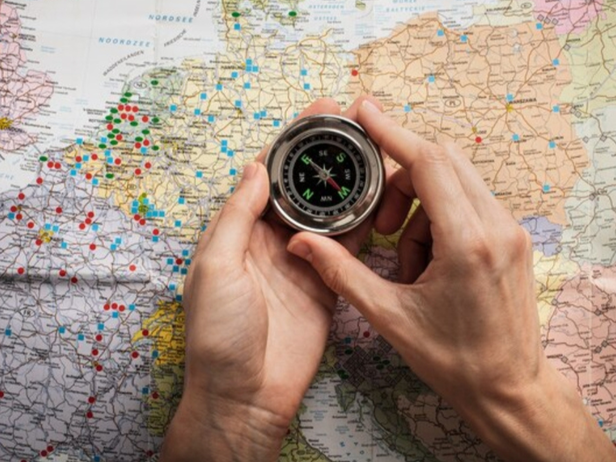
Navigation, destiny, direction
( Image credit : Freepik )
Science Began with Looking Up

When Science Looked to the Sky<br>
( Image credit : Freepik )
The Sky as Emotional Refuge

The Sky as Emotional Refuge
( Image credit : Freepik )
Technology Changed Access, Not Instinct
Why We Still Look Up
Even today, when science explains the mechanics and technology reaches the stars, the human heart still looks upward for meaning. Because some answers are not meant to be solved they are meant to be felt. And perhaps that is why, no matter how advanced we become, humanity will always return its gaze to the sky not to escape Earth, but to understand ourselves better.