Why Krishna’s Childhood Leelas Still Confuse The World
Noopur Kumari | May 25, 2026, 15:00 IST
At first glance, Krishna’s leelas seem full of harmless mischief. He stole butter from homes, hid the Gopis’ clothes, and constantly surprised the people around him. But years later, those same actions appeared to complete a mysterious spiritual circle. The one who playfully took clothes became the divine protector during Draupadi’s humiliation. The one called “Makhan Chor” later satisfied an entire universe with a single grain of rice. The one who humbled Indra eventually stood beside Indra’s own son, Arjuna, during the Mahabharata war. Krishna’s life was never random. Every playful act quietly carried the seed of future protection, balance, and divine timing.

People often remember Krishna for his playful childhood stories stealing butter, hiding clothes, teasing the Gopis, and smiling through every mischievous moment. Many see these stories only as entertainment. Some even misunderstand them completely. But what if every one of Krishna’s playful actions carried a deeper promise hidden inside it? What if the same Krishna who appeared playful in childhood later became the greatest protector during humanity’s darkest moments? His life reveals a powerful truth that most people miss Krishna never truly took anything away without returning it in a greater form at the right time.
![Krishna And The Gopis Near River]()
One of the most debated stories about Krishna is the episode where he hid the clothes of the Gopis while they bathed in the river. Many people today judge this story without understanding its spiritual symbolism. In devotional traditions, the act represented surrender of ego, pride, and worldly identity before divine love. But years later, the same Krishna protected Draupadi during her public humiliation in the Mahabharata. When she was helpless in a royal court, Krishna became her endless shield of dignity through the miracle of unending cloth. The playful act of taking transformed into the divine act of protecting when it truly mattered.
![Young Krishna Stealing Butter]()
As a child, Krishna was famously called “Makhan Chor” because he constantly stole butter from the homes of villagers. People laughed, complained, and chased him through the streets of Vrindavan. It looked like innocent mischief. But later in life, Krishna revealed the deeper meaning behind his playful hunger. During the exile of the Pandavas, when Sage Durvasa arrived with thousands of disciples, Draupadi feared disaster because there was no food left to serve them. In that desperate moment, Krishna appeared and ate just a single grain of rice from her vessel. That one grain spiritually satisfied the hunger of countless people, protecting the Pandavas from danger and humiliation.
![Krishna Lifting Govardhan Hill]()
In the famous Govardhan Leela, Krishna challenged the pride of Indra by asking villagers to worship nature instead of blindly fearing divine anger. Furious, Indra unleashed devastating storms upon Vrindavan. Krishna then lifted the Govardhan mountain to protect everyone beneath it, humiliating Indra’s arrogance. Yet years later, during the Mahabharata war, Krishna stood beside Arjuna Indra’s own son as his guide and protector. He even delivered the Bhagavad Gita when Arjuna felt spiritually broken. Krishna’s actions never came from revenge. He corrected pride but never abandoned those who later needed wisdom and protection.
The deeper beauty of Krishna’s life lies in how every playful moment eventually revealed divine purpose. His leelas were never meaningless entertainment. What appeared as mischief during childhood became protection, wisdom, and grace during life’s hardest battles. Krishna taught that divine timing does not always make sense immediately. Sometimes life takes something away only to return it in a greater form later. This is why millions still feel emotionally connected to Krishna. He was not distant from human emotions. He laughed, teased, protected, guided, and stood beside people during their darkest moments. His life reminds devotees that losses are not always punishments sometimes they are preparations for something bigger.
Many people feel broken when life suddenly takes away relationships, success, money, peace, or opportunities. But Krishna’s leelas quietly teach patience during painful phases. Not every loss is permanent. Not every delay means rejection. Sometimes life completes its circle much later than expected. Just as Krishna returned dignity, protection, and guidance when people needed it most, life too often restores meaning in unexpected ways. The lesson is not passive waiting but continuing one’s duties with faith and patience. Krishna’s story gives emotional comfort because it reminds people that existence itself follows balance. What disappears today may return tomorrow in a wiser, stronger, and more meaningful form.
Unlock insightful tips and inspiration on personal growth, productivity, and well-being. Stay motivated and updated with the latest at My Life XP.
1. Why is Krishna called Makhan Chor?
Krishna is called Makhan Chor because, according to Hindu stories, he playfully stole butter from the homes of villagers during his childhood in Vrindavan.
2. Why did Krishna steal the clothes of the Gopis?
In spiritual traditions, Krishna hiding the Gopis’ clothes symbolized surrendering ego and worldly identity before divine love and devotion, not humiliation or disrespect.
3. How did Krishna protect Draupadi?
During Draupadi’s humiliation in the Mahabharata, Krishna is believed to have protected her dignity by providing an endless stream of cloth during the attempted disrobing.
4. What is the deeper meaning behind Krishna’s leelas?
Krishna’s leelas often carry symbolic lessons about faith, divine timing, ego, love, protection, patience, and spiritual wisdom hidden beneath playful actions.
5. Why is Krishna considered both playful and divine?
Krishna is unique because he combined human emotions, humor, and affection with deep spiritual wisdom and divine protection.
The Leela Most People Misunderstand
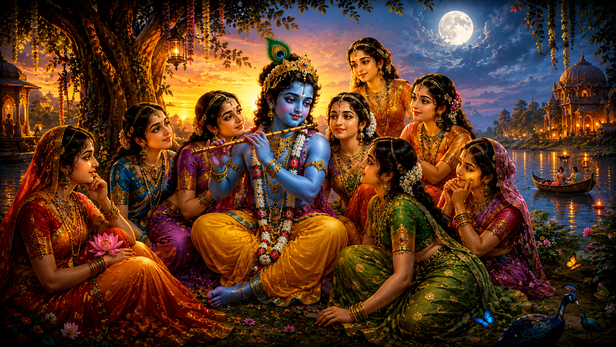
Krishna And The Gopis Near River
One of the most debated stories about Krishna is the episode where he hid the clothes of the Gopis while they bathed in the river. Many people today judge this story without understanding its spiritual symbolism. In devotional traditions, the act represented surrender of ego, pride, and worldly identity before divine love. But years later, the same Krishna protected Draupadi during her public humiliation in the Mahabharata. When she was helpless in a royal court, Krishna became her endless shield of dignity through the miracle of unending cloth. The playful act of taking transformed into the divine act of protecting when it truly mattered.
Why Makhan Chor Became The Savior
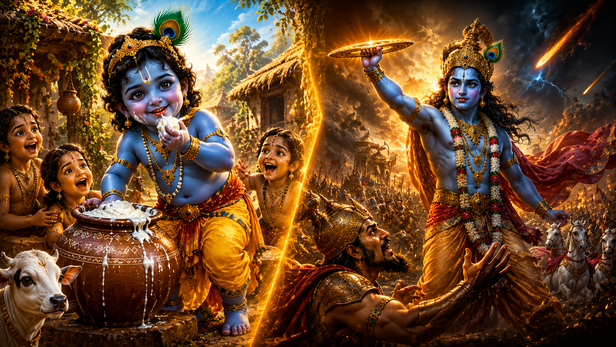
Young Krishna Stealing Butter
As a child, Krishna was famously called “Makhan Chor” because he constantly stole butter from the homes of villagers. People laughed, complained, and chased him through the streets of Vrindavan. It looked like innocent mischief. But later in life, Krishna revealed the deeper meaning behind his playful hunger. During the exile of the Pandavas, when Sage Durvasa arrived with thousands of disciples, Draupadi feared disaster because there was no food left to serve them. In that desperate moment, Krishna appeared and ate just a single grain of rice from her vessel. That one grain spiritually satisfied the hunger of countless people, protecting the Pandavas from danger and humiliation.
The Day Krishna Balanced Indra’s Pride

Krishna Lifting Govardhan Hill
In the famous Govardhan Leela, Krishna challenged the pride of Indra by asking villagers to worship nature instead of blindly fearing divine anger. Furious, Indra unleashed devastating storms upon Vrindavan. Krishna then lifted the Govardhan mountain to protect everyone beneath it, humiliating Indra’s arrogance. Yet years later, during the Mahabharata war, Krishna stood beside Arjuna Indra’s own son as his guide and protector. He even delivered the Bhagavad Gita when Arjuna felt spiritually broken. Krishna’s actions never came from revenge. He corrected pride but never abandoned those who later needed wisdom and protection.
The Hidden Pattern In Krishna’s Life
The Lesson Hidden For Every Human Being
Unlock insightful tips and inspiration on personal growth, productivity, and well-being. Stay motivated and updated with the latest at My Life XP.
Frequently Asked Questions (FAQs)
Krishna is called Makhan Chor because, according to Hindu stories, he playfully stole butter from the homes of villagers during his childhood in Vrindavan.
2. Why did Krishna steal the clothes of the Gopis?
In spiritual traditions, Krishna hiding the Gopis’ clothes symbolized surrendering ego and worldly identity before divine love and devotion, not humiliation or disrespect.
3. How did Krishna protect Draupadi?
During Draupadi’s humiliation in the Mahabharata, Krishna is believed to have protected her dignity by providing an endless stream of cloth during the attempted disrobing.
4. What is the deeper meaning behind Krishna’s leelas?
Krishna’s leelas often carry symbolic lessons about faith, divine timing, ego, love, protection, patience, and spiritual wisdom hidden beneath playful actions.
5. Why is Krishna considered both playful and divine?
Krishna is unique because he combined human emotions, humor, and affection with deep spiritual wisdom and divine protection.