Why Nobody Wanted to Fight Barbarika
Noopur Kumari | Jun 20, 2026, 12:10 IST
Barbarika, the grandson of Bhima and son of Ghatotkacha, possessed extraordinary powers and three divine arrows capable of deciding any battle. Yet his greatest strength became his greatest danger. Bound by a vow to support the weaker side, Barbarika unknowingly threatened the balance of the entire war. His story is not just about power it is about wisdom, destiny, and the responsibility that comes with great abilities.

Imagine a warrior so powerful that the outcome of an entire war could depend on a single decision he made. A warrior whose weapons were so unstoppable that even the greatest heroes of the Mahabharata would struggle against him. Now imagine that this warrior never fought a single battle in the Kurukshetra War. Why? The answer is one of the most fascinating and mysterious stories connected to the Mahabharata. It involves unmatched power, an impossible promise, and a decision by Lord Krishna that changed the fate of history itself.
![The Arrival of Barbarika]()
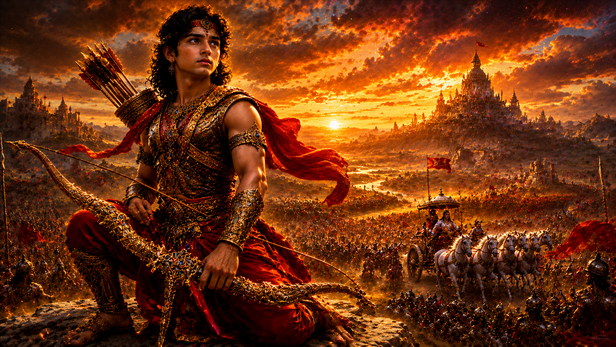
Barbarika was no ordinary warrior. Blessed with incredible martial skills and divine weapons, he possessed abilities that surpassed many famous heroes of his time. Unlike other warriors who carried countless weapons into battle, Barbarika carried only three arrows. Yet these arrows made him nearly invincible. Stories describe him as calm, confident, and deeply devoted to righteousness. His reputation spread long before he reached Kurukshetra. What made him truly remarkable was not his strength alone, but the terrifying efficiency of the weapons he carried.
![The Divine Arrows of Barbarika]()
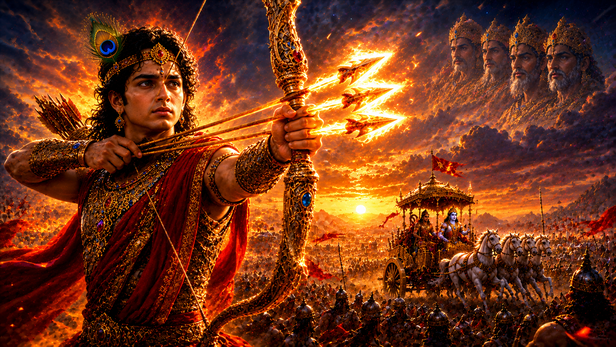
Barbarika's three arrows were said to possess extraordinary powers. One arrow could mark everything he wanted to destroy. Another could mark everything he wished to protect. The third would complete the task instantly before returning to his quiver. This meant that no matter how large an army was, Barbarika could potentially defeat it with minimal effort. The idea of a warrior capable of ending a massive war in moments made him unlike anyone else in the Mahabharata. His weapons transformed him into a force few could challenge.
Before leaving for battle, Barbarika made a vow that seemed honorable. He promised to always support the weaker side in any conflict. At first glance, this appeared to be a commitment to fairness and justice. However, Krishna quickly recognized a serious problem. In a war where power constantly shifted, the weaker side would keep changing. If Barbarika joined one side and made it stronger, the opposing side would become weaker. He would then switch sides repeatedly, creating an endless cycle with devastating consequences.
Disguised as a Brahmin, Krishna approached Barbarika and questioned him about his abilities and vow. Through their conversation, Krishna realized that Barbarika's presence could disrupt the very purpose of the war. Kurukshetra was not merely a military conflict. It was a battle involving dharma, karma, and destiny. A warrior capable of eliminating everyone through overwhelming power could prevent the deeper lessons of the Mahabharata from unfolding. Krishna understood that strength without wisdom could alter the balance of events in dangerous ways.
The fear surrounding Barbarika was not based on rumors. It was based on possibility. His divine arrows gave him an advantage few warriors could counter. Traditional combat relied on strategy, endurance, and skill. Barbarika's weapons reduced those factors dramatically. Whether Pandava or Kaurava, every warrior knew that fighting someone with such unmatched power carried enormous risk. His abilities made victory uncertain for everyone. In many ways, Barbarika represented a force so overwhelming that conventional warfare seemed almost meaningless against him.
When Krishna asked for charity, Barbarika agreed without hesitation. The request was shocking: Krishna asked for his head. Understanding the divine purpose behind the request, Barbarika accepted. Before the war began, he made the ultimate sacrifice. Yet Krishna honored his devotion by granting him the ability to witness the entire battle. From a hilltop, Barbarika observed the events of Kurukshetra unfold. His sacrifice transformed him from a warrior seeking glory into a symbol of devotion and surrender.
Barbarika's story offers a lesson that remains relevant today. Power alone is not enough. Strength, talent, and capability must be guided by wisdom and understanding. His vow was noble, but its consequences revealed the complexity of real-world decisions. Sometimes good intentions create unexpected outcomes. Krishna's intervention reminds us that wisdom often sees what strength cannot. The story teaches that true greatness lies not merely in what we can do, but in understanding when, why, and how our power should be used.
Unlock insightful tips and inspiration on personal growth, productivity, and well-being. Stay motivated and updated with the latest at My Life XP.
1. Who was Barbarika in the Mahabharata?
Barbarika was the grandson of Bhima and the son of Ghatotkacha. He was a powerful warrior known for his extraordinary skills and his three divine arrows.
2. Why is Barbarika famous?
Barbarika is famous for possessing three magical arrows that could decide the outcome of any battle. He is also remembered for his vow to always support the weaker side in a conflict.
3. What were Barbarika's three arrows capable of doing?
According to popular traditions, one arrow could mark targets to be destroyed, another could mark those to be protected, and the third could complete the task before returning to Barbarika's quiver.
4. Why did Barbarika decide to support the weaker side?
Barbarika believed it was his duty to help those who were at a disadvantage. His vow reflected his commitment to fairness and compassion rather than personal gain.
5. Why did Krishna stop Barbarika from fighting in the war?
According to traditional stories, Krishna realized that Barbarika's vow would create a cycle where he would keep switching sides as the balance of power changed. This could have disrupted the purpose and outcome of the Kurukshetra War.
A Warrior Unlike Any Other
The Arrival of Barbarika
Barbarika was no ordinary warrior. Blessed with incredible martial skills and divine weapons, he possessed abilities that surpassed many famous heroes of his time. Unlike other warriors who carried countless weapons into battle, Barbarika carried only three arrows. Yet these arrows made him nearly invincible. Stories describe him as calm, confident, and deeply devoted to righteousness. His reputation spread long before he reached Kurukshetra. What made him truly remarkable was not his strength alone, but the terrifying efficiency of the weapons he carried.
The Mystery of the Three Arrows
The Divine Arrows of Barbarika
Barbarika's three arrows were said to possess extraordinary powers. One arrow could mark everything he wanted to destroy. Another could mark everything he wished to protect. The third would complete the task instantly before returning to his quiver. This meant that no matter how large an army was, Barbarika could potentially defeat it with minimal effort. The idea of a warrior capable of ending a massive war in moments made him unlike anyone else in the Mahabharata. His weapons transformed him into a force few could challenge.
The Promise That Changed Everything
Krishna Saw the Bigger Picture
Why No One Wanted to Face Him
The Sacrifice That Preserved the War
The Lesson Hidden in Barbarika's Story
Unlock insightful tips and inspiration on personal growth, productivity, and well-being. Stay motivated and updated with the latest at My Life XP.
Frequently Asked Questions (FAQs)
Barbarika was the grandson of Bhima and the son of Ghatotkacha. He was a powerful warrior known for his extraordinary skills and his three divine arrows.
2. Why is Barbarika famous?
Barbarika is famous for possessing three magical arrows that could decide the outcome of any battle. He is also remembered for his vow to always support the weaker side in a conflict.
3. What were Barbarika's three arrows capable of doing?
According to popular traditions, one arrow could mark targets to be destroyed, another could mark those to be protected, and the third could complete the task before returning to Barbarika's quiver.
4. Why did Barbarika decide to support the weaker side?
Barbarika believed it was his duty to help those who were at a disadvantage. His vow reflected his commitment to fairness and compassion rather than personal gain.
5. Why did Krishna stop Barbarika from fighting in the war?
According to traditional stories, Krishna realized that Barbarika's vow would create a cycle where he would keep switching sides as the balance of power changed. This could have disrupted the purpose and outcome of the Kurukshetra War.