Why Parashurama’s Axe Wouldn’t Leave His Hand
Noopur Kumari | Wed, 13 May 2026
Parashurama obeyed his father without hesitation, but the emotional weight of his action never truly disappeared. Even after his mother and brothers were revived through divine blessings, the warrior could not free himself from the invisible burden inside him. Legends say his weapon remained attached to his hand, symbolizing the sin and guilt he carried within. Desperate for peace, he wandered through forests, rivers, and sacred pilgrimage sites searching for liberation. But why did the axe finally separate only after reaching the Lohit River? And how did this moment transform Parashurama from a grieving son into the furious warrior who destroyed Kshatriyas twenty-one times? The answer reveals one of mythology’s darkest emotional transformations.

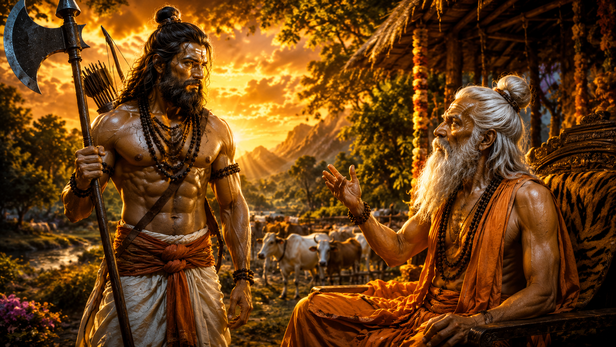
Parashurama Standing Before Sage Jamadagni
Image credit : ChatGPT(ai)
Lord Parashurama is remembered as one of the fiercest warriors in Hindu mythology. A man so powerful that even kings feared his anger. But behind his legendary strength hides a painful story many people never truly understand. After obeying his father Jamadagni’s command and killing his own mother, Parashurama later received a divine boon that brought her back to life. Everything looked normal again. His mother lived. His brothers returned. The family was restored. But something terrifying had changed forever. His axe the mighty Parashu refused to leave his hand. And according to legends, it was not a curse from the gods. It was something far more painful.
His own guilt.
![Parashurama Standing Before Sage Jamadagni]()
The story began when Sage Jamadagni ordered his sons to punish their mother Renuka after suspecting impurity in her thoughts. While the other brothers refused, Parashurama obeyed immediately and carried out the command without hesitation. Pleased by his obedience, Jamadagni offered him a boon. Parashurama asked for his mother and brothers to be brought back to life, and the sage granted it instantly. Everything appeared restored as if nothing had happened. But deep inside, Parashurama had already changed. Though the world looked normal again, his soul quietly carried a wound that would soon begin haunting him everywhere he went.
![Parashurama Holding the Stuck Axe]()
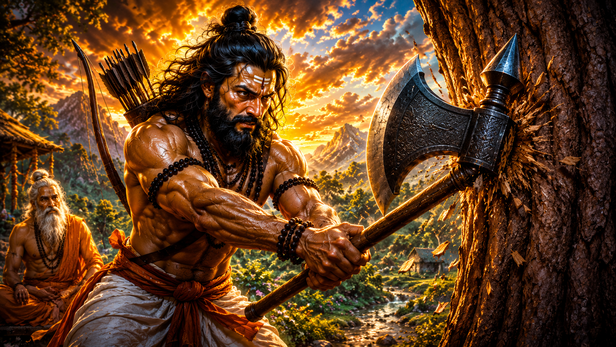
Soon after the incident, Parashurama realized something strange. His divine axe would no longer separate from his hand. No matter how hard he tried, the weapon remained attached to him constantly. Legends say this was not a punishment from heaven or a curse spoken by any sage. Instead, the axe reflected his own emotional guilt. Even though he had obeyed his father and later restored his family through blessings, his heart could not escape the memory of what he had done. The weapon became a permanent reminder that some actions may be forgiven by others, but not easily forgiven by oneself.
Unable to bear the weight of guilt, Parashurama began wandering across sacred lands in search of liberation. He performed intense penance, visited holy rivers, and immersed himself in spiritual discipline. But despite all his efforts, the axe still remained attached to his hand. Every pilgrimage became another reminder that external rituals alone could not heal inner pain. According to legends, Parashurama slowly transformed during this journey. The obedient son who once followed commands blindly began confronting the emotional consequences of his own actions. His search was no longer only spiritual. It became deeply personal, emotional, and painfully human.
After countless journeys and years of emotional suffering, Parashurama finally reached the sacred Lohit River. Legends say that the moment he bathed in its waters, something extraordinary happened. For the first time since the incident, his axe separated from his hand. The river symbolized purification, release, and emotional transformation. Many believe the weapon detached not because the river magically removed a curse, but because Parashurama had finally confronted and accepted his inner pain. This moment became the emotional rebirth of the warrior. But it also marked the beginning of a much darker chapter waiting ahead in his destiny.
The same man who once wandered seeking peace later became one of mythology’s most feared warriors. Legends say Parashurama eventually destroyed Kshatriya rulers twenty-one times after witnessing the corruption and arrogance spreading among kings. Many believe his earlier guilt and emotional suffering changed him permanently, turning his pain into fierce aggression against injustice. His story became more than revenge or war. It became the transformation of a deeply wounded soul carrying unbearable memories. That is why Parashurama remains such a complex figure in Hindu mythology not only powerful, but emotionally tragic, spiritually conflicted, and terrifyingly intense at the same time.
Unlock insightful tips and inspiration on personal growth, productivity, and well-being. Stay motivated and updated with the latest at My Life XP.
Why did Parashurama obey his father’s command?
According to Hindu mythology, Parashurama was known for his absolute obedience and discipline toward his father, Sage Jamadagni.
Did Parashurama really kill his mother Renuka?
Yes, legends say Parashurama carried out his father’s command and later revived her through a divine boon.
Why did the axe remain attached to Parashurama’s hand?
Mythological stories suggest the axe symbolized his deep inner guilt and emotional burden after the incident.
Was Parashurama cursed by any sage or god?
No major legend directly mentions a curse. Many interpretations describe the stuck axe as a reflection of his own guilt and spiritual suffering.
What was special about the Lohit River?
The Lohit River is believed to have purified Parashurama spiritually, allowing his axe to finally separate from his hand.
Why is Parashurama considered different from other warriors?
Parashurama is seen as both a sage and a warrior — a deeply spiritual figure with intense anger and emotional conflict.
Why did Parashurama destroy Kshatriyas twenty-one times?
According to mythology, he fought against corrupt and arrogant rulers after witnessing growing injustice and misuse of power.
His own guilt.
The Obedience That Changed Everything
Parashurama Standing Before Sage Jamadagni
Image credit : ChatGPT (ai)
The story began when Sage Jamadagni ordered his sons to punish their mother Renuka after suspecting impurity in her thoughts. While the other brothers refused, Parashurama obeyed immediately and carried out the command without hesitation. Pleased by his obedience, Jamadagni offered him a boon. Parashurama asked for his mother and brothers to be brought back to life, and the sage granted it instantly. Everything appeared restored as if nothing had happened. But deep inside, Parashurama had already changed. Though the world looked normal again, his soul quietly carried a wound that would soon begin haunting him everywhere he went.
The Axe That Refused to Leave His Hand
Parashurama Holding the Stuck Axe
Image credit : ChatGPT(ai)
Soon after the incident, Parashurama realized something strange. His divine axe would no longer separate from his hand. No matter how hard he tried, the weapon remained attached to him constantly. Legends say this was not a punishment from heaven or a curse spoken by any sage. Instead, the axe reflected his own emotional guilt. Even though he had obeyed his father and later restored his family through blessings, his heart could not escape the memory of what he had done. The weapon became a permanent reminder that some actions may be forgiven by others, but not easily forgiven by oneself.
His Search for Freedom Became a Spiritual Journey
The Lohit River Finally Broke the Curse of Guilt
The Birth of the Warrior Who Destroyed Kings
Unlock insightful tips and inspiration on personal growth, productivity, and well-being. Stay motivated and updated with the latest at My Life XP.
Frequently Asked Questions (FAQs)
According to Hindu mythology, Parashurama was known for his absolute obedience and discipline toward his father, Sage Jamadagni.
Did Parashurama really kill his mother Renuka?
Yes, legends say Parashurama carried out his father’s command and later revived her through a divine boon.
Why did the axe remain attached to Parashurama’s hand?
Mythological stories suggest the axe symbolized his deep inner guilt and emotional burden after the incident.
Was Parashurama cursed by any sage or god?
No major legend directly mentions a curse. Many interpretations describe the stuck axe as a reflection of his own guilt and spiritual suffering.
What was special about the Lohit River?
The Lohit River is believed to have purified Parashurama spiritually, allowing his axe to finally separate from his hand.
Why is Parashurama considered different from other warriors?
Parashurama is seen as both a sage and a warrior — a deeply spiritual figure with intense anger and emotional conflict.
Why did Parashurama destroy Kshatriyas twenty-one times?
According to mythology, he fought against corrupt and arrogant rulers after witnessing growing injustice and misuse of power.