Why This 5,000-Year-Old Hindu Ritual Still Protects and Blesses Children
Noopur Kumari | Tue, 24 Feb 2026
Why do Hindu babies get their ears pierced so early? Is it just tradition, or is there a deeper spiritual meaning? Karnavedha, one of the 16 sacred samskaras of Hinduism, is more than a cultural custom. It symbolizes opening the child to divine knowledge, protecting health, and preparing the soul for life’s journey. Rooted in Vedic wisdom, supported by Ayurveda, and still widely practiced across India, this ritual connects body, mind, and spirit. Let us explore the sacred, scientific, and emotional significance behind this timeless rite of passage.

Pierce Their Ears
Image credit : ChatGPT(AI)
In Hindu dharma, life is seen as a sacred journey marked by sixteen important samskaras or purification rites. These rituals guide a person from birth to death with spiritual awareness. Among them is Karnavedha, the ear piercing ceremony performed in early childhood. Mentioned in ancient texts such as the Manusmriti and the Grihya Sutras, Karnavedha is not merely cosmetic. It reflects a belief that the ears are gateways to knowledge. Since the Vedas were traditionally passed down through sound, hearing was considered sacred. This ceremony prepares a child to receive wisdom, both worldly and divine.
![Child Facing the Rising Sun During Ceremony]()
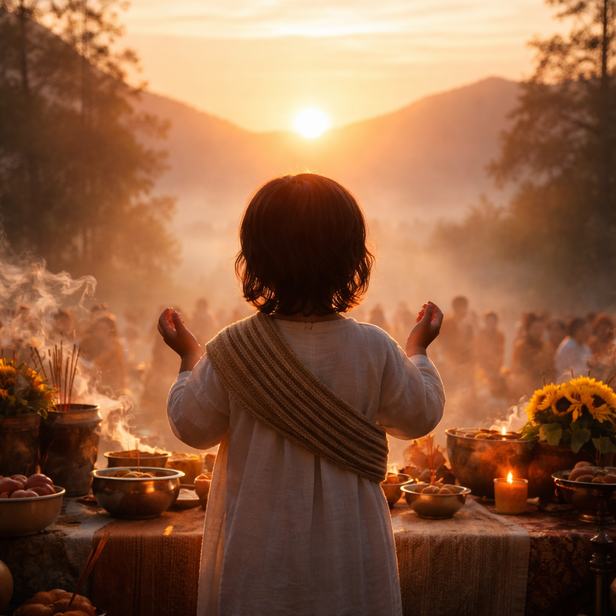
Karnavedha comes from the Sanskrit words karna meaning ear and vedha meaning to pierce. Spiritually, the ritual signifies opening the inner ear to sacred sound known as nada. In Vedic philosophy, sound is the first form of creation. By piercing the ears, the child is symbolically prepared to receive spiritual teachings. The ceremony often takes place at an auspicious time, with the child facing east to welcome positive cosmic energy and blessings from the rising sun.
Karnavedha is one of the sixteen samskaras described in classical Hindu scriptures. Texts like the Manusmriti and Grihya Sutras outline its proper timing and procedure. Traditionally, it is performed in the sixth or seventh month of infancy, or during the third, fifth, or seventh year. For boys, the right ear is pierced first, symbolizing strength and responsibility. For girls, the left ear is pierced first, representing grace and nurturing energy. These symbolic gestures connect the ritual to deeper spiritual meanings.
Ayurveda associates the earlobes with important acupressure points linked to brain development and reproductive health. Piercing these points is believed to stimulate intelligence, enhance memory, and improve focus. Some traditions also say it supports eyesight and balanced emotions. While modern science views these claims differently, many families continue the practice believing it promotes overall wellbeing. The ritual therefore combines spirituality with traditional health wisdom passed down through generations.
![Grand South Indian Ear Piercing Ceremony]()
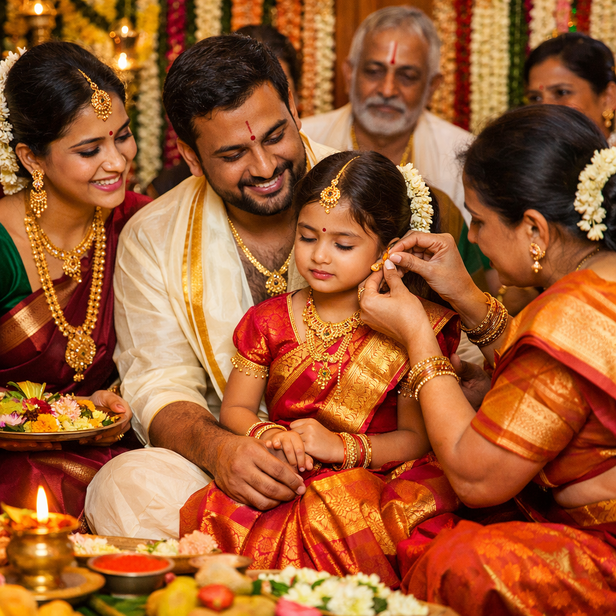
Across India, Karnavedha is celebrated with devotion and joy. In northern regions, the ceremony is often performed by a priest during auspicious months. In southern states, it may be a grand family event, sometimes combined with Mundan, the first haircut ritual. Relatives gather, prayers are offered, and blessings are given. The ceremony marks the child’s readiness to begin learning and listening to sacred teachings. It becomes both a spiritual milestone and a cherished family memory.
At its heart, Karnavedha represents preparedness. In Hindu thought, true knowledge begins with listening. The ears are considered the path through which dharma enters the mind. By performing this ritual, families pray that the child grows into a wise and balanced individual. It is not only about tradition but about intention. The pierced ear becomes a reminder that life’s greatest lessons are heard with attention and absorbed with humility.
Parent Whispering a
![Parent Whispering a Blessing into Child’s Ear]()
Karnavedha is much more than a cultural practice. It is a sacred connection between the body, mind, and spirit. Deeply rooted in Hindu scriptures and supported by traditional Ayurvedic beliefs, this ritual has been lovingly preserved across generations. It reflects the idea that true learning begins with attentive listening. By piercing the ears, Hindu tradition symbolically prepares a child to receive wisdom and divine knowledge. In a rapidly changing world, this ancient samskara continues to remind families of their spiritual heritage, guiding each child toward a life shaped by awareness, discipline, and inner growth.
Unlock insightful tips and inspiration on personal growth, productivity, and well-being. Stay motivated and updated with the latest at My Life XP.
1. What is Karnavedha in Hinduism?
Karnavedha is the traditional Hindu ear piercing ceremony. It is one of the sixteen samskaras, or sacred life rituals, performed to purify and prepare a child for spiritual growth and learning.
2. At what age is Karnavedha performed?
It is usually performed in the sixth or seventh month after birth, or during the third, fifth, or seventh year. The exact timing depends on family tradition and guidance from a priest.
3. Is Karnavedha mentioned in Hindu scriptures?
Yes. Ancient texts like the Manusmriti and Grihya Sutras describe this ritual as part of the sixteen samskaras.
4. Why are the ears considered important spiritually?
In Hindu belief, the ears are gateways to knowledge. Since sacred teachings were traditionally heard and memorized, listening is seen as the first step toward wisdom.
5. Are there health benefits linked to ear piercing?
According to Ayurveda, the earlobes contain pressure points connected to brain and body functions. Piercing them is believed to support mental balance and overall wellbeing.
6. Is Karnavedha performed for both boys and girls?
Yes. The ritual is traditionally performed for both boys and girls, symbolizing readiness to receive knowledge and blessings.
The Spiritual Meaning of Karnavedha
Child Facing the Rising Sun During Ceremony
Image credit : ChatGPT(AI)
Karnavedha comes from the Sanskrit words karna meaning ear and vedha meaning to pierce. Spiritually, the ritual signifies opening the inner ear to sacred sound known as nada. In Vedic philosophy, sound is the first form of creation. By piercing the ears, the child is symbolically prepared to receive spiritual teachings. The ceremony often takes place at an auspicious time, with the child facing east to welcome positive cosmic energy and blessings from the rising sun.
Scriptural Roots and the 16 Samskaras
Ayurvedic and Health Beliefs
Cultural Celebrations Across India
Grand South Indian Ear Piercing Ceremony
Image credit : CHATGPT(AI)
Across India, Karnavedha is celebrated with devotion and joy. In northern regions, the ceremony is often performed by a priest during auspicious months. In southern states, it may be a grand family event, sometimes combined with Mundan, the first haircut ritual. Relatives gather, prayers are offered, and blessings are given. The ceremony marks the child’s readiness to begin learning and listening to sacred teachings. It becomes both a spiritual milestone and a cherished family memory.
Readiness to Receive Sacred Knowledge
Parent Whispering a Blessing into Child’s Ear

Parent Whispering a Blessing into Child’s Ear
Image credit : CHATGPT(AI)
Karnavedha is much more than a cultural practice. It is a sacred connection between the body, mind, and spirit. Deeply rooted in Hindu scriptures and supported by traditional Ayurvedic beliefs, this ritual has been lovingly preserved across generations. It reflects the idea that true learning begins with attentive listening. By piercing the ears, Hindu tradition symbolically prepares a child to receive wisdom and divine knowledge. In a rapidly changing world, this ancient samskara continues to remind families of their spiritual heritage, guiding each child toward a life shaped by awareness, discipline, and inner growth.
Unlock insightful tips and inspiration on personal growth, productivity, and well-being. Stay motivated and updated with the latest at My Life XP.
Frequently Asked Questions (FAQs)
Karnavedha is the traditional Hindu ear piercing ceremony. It is one of the sixteen samskaras, or sacred life rituals, performed to purify and prepare a child for spiritual growth and learning.
2. At what age is Karnavedha performed?
It is usually performed in the sixth or seventh month after birth, or during the third, fifth, or seventh year. The exact timing depends on family tradition and guidance from a priest.
3. Is Karnavedha mentioned in Hindu scriptures?
Yes. Ancient texts like the Manusmriti and Grihya Sutras describe this ritual as part of the sixteen samskaras.
4. Why are the ears considered important spiritually?
In Hindu belief, the ears are gateways to knowledge. Since sacred teachings were traditionally heard and memorized, listening is seen as the first step toward wisdom.
5. Are there health benefits linked to ear piercing?
According to Ayurveda, the earlobes contain pressure points connected to brain and body functions. Piercing them is believed to support mental balance and overall wellbeing.
6. Is Karnavedha performed for both boys and girls?
Yes. The ritual is traditionally performed for both boys and girls, symbolizing readiness to receive knowledge and blessings.