PM Modi’s Indonesia Visit Just Changed India’s Defence Game
Noopur Kumari | Jul 08, 2026, 10:00 IST
The BrahMos agreement grabbed global attention, but the real story goes much deeper. From rare earth minerals and space cooperation to digital commerce, healthcare, maritime security, and cultural diplomacy, India and Indonesia signed a wide range of partnerships. These agreements are expected to strengthen regional security, create new business opportunities, expand India's global influence, and reinforce the vision of an Atmanirbhar Bharat. Here are the biggest takeaways from this landmark visit.

"Outcome of Indonesia visit is comprehensive": PM Modi
Image credit : ANI
India’s relationship with Indonesia has entered a new chapter, and this time, it is not just about diplomacy. It is about defence, technology, trade, education, and strategic influence across the Indo-Pacific. The biggest headline is Indonesia’s decision to acquire India’s BrahMos supersonic cruise missile, one of the fastest and most powerful missile systems in the world. But that is only one part of a much bigger story. Prime Minister Narendra Modi’s visit produced 20 major agreements that could reshape India’s position as a trusted global partner and defence exporter.
![PM Modi's Indonesia visit culminates into 20 MoUs, includes cooperation on BrahMos missile systems]()
Indonesia's decision to procure the BrahMos missile is one of India's biggest defence export achievements. Developed jointly by India and Russia, BrahMos is known for its speed, precision, and advanced strike capability. Alongside BrahMos, Indonesia will also cooperate on India's indigenous Astra air-to-air missile. The agreement reflects growing confidence in India's defence technology and supports the country's ambition to become a leading global defence manufacturer while strengthening Indonesia's military capabilities.
India and Indonesia have expanded their maritime security partnership to improve coordination between coast guards, strengthen maritime domain awareness, conduct joint search and rescue operations, and support freedom of navigation. Indonesia will also deploy a liaison officer at India's Information Fusion Centre for the Indian Ocean Region. This partnership improves information sharing and enhances regional security at a time when the Indo-Pacific has become one of the world's most strategically important regions.
The visit also focused on industries that will power future economies. Both countries signed agreements covering critical minerals, mining investment, advanced extraction technology, and rare earth magnet development. Steel Authority of India Limited will partner with Indonesia's Krakatau Steel to establish a stainless-steel manufacturing facility. These initiatives are expected to strengthen supply chains, reduce import dependence, generate employment, and support long-term industrial growth in both countries.
The partnership extends far beyond defence. India and Indonesia agreed to collaborate in telecommunications, quantum communication, startup ecosystems, scientific research, digital commerce, and peaceful space exploration. ONDC will work with Indonesia's digital commerce network to promote Digital Public Infrastructure, while research institutions will jointly develop emerging technologies. These agreements highlight India's growing role as a technology partner in Southeast Asia.
Several agreements directly benefit ordinary citizens. The two countries will cooperate on medical product regulation, healthcare training, disaster management, agricultural research, and food security. India will also supply 100 tonnes of DWR-162 wheat seeds to Indonesia. These initiatives improve healthcare standards, strengthen emergency response systems, enhance agricultural productivity, and promote sustainable development through shared expertise.
India's influence is expanding through education and cultural exchange as well. IIM Bangalore will establish a campus in Indonesia's Singhasari Special Economic Zone, bringing Indian management education to Southeast Asia. India will also support the restoration of the historic Prambanan Temple Complex. Additionally, both countries will celebrate the shared legacy of Rabindranath Tagore and Ki Hajar Dewantara through year-long academic and cultural programmes, strengthening people-to-people relations.
The significance of this visit extends well beyond the BrahMos agreement. The 20 outcomes demonstrate that India is expanding its influence through defence exports, technological innovation, education, healthcare, industry, and diplomacy simultaneously. As geopolitical competition intensifies across the Indo-Pacific, these partnerships position India as a reliable strategic partner capable of delivering security, economic growth, and long-term cooperation. This visit may be remembered as a defining moment in India's rise as a global power.
Unlock insightful tips and inspiration on personal growth, productivity, and well-being. Stay motivated and updated with the latest at My Life XP.
1. Why is the BrahMos deal with Indonesia important for India?
The BrahMos deal is a major boost for India's defence exports and showcases the country's growing capabilities in indigenous military technology. It also strengthens India's strategic partnership with Indonesia in the Indo-Pacific region.
2. What is the BrahMos missile?
BrahMos is a supersonic cruise missile jointly developed by India and Russia. It is known for its high speed, precision strike capability, and ability to hit both land and sea targets.
3. What other defence agreements were signed during PM Modi's Indonesia visit?
Apart from BrahMos cooperation, India and Indonesia agreed to collaborate on the indigenous Astra air-to-air missile, expand defence exchanges, strengthen maritime security, and improve disaster management cooperation.
4. What were the major outcomes of PM Modi's Indonesia visit?
The visit resulted in 20 key agreements covering defence, critical minerals, steel manufacturing, healthcare, agriculture, space research, telecommunications, digital commerce, education, disaster management, and cultural cooperation.
5. How will these agreements benefit India?
The agreements are expected to increase defence exports, strengthen critical mineral supply chains, boost technology partnerships, expand educational opportunities, improve trade, and enhance India's strategic influence across the Indo-Pacific region
BrahMos Deal Marks India's Biggest Defence Export Milestone
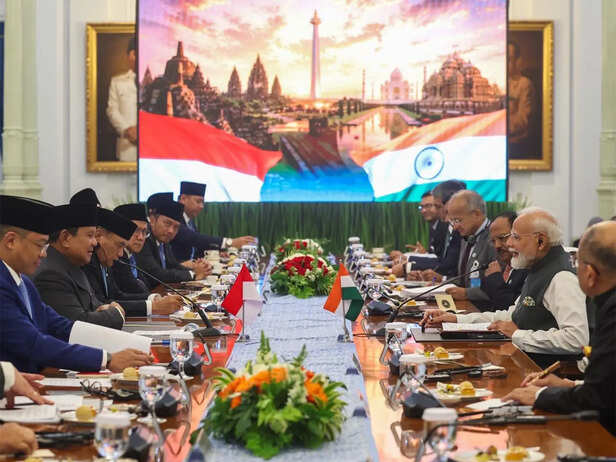
PM Modi's Indonesia visit culminates into 20 MoUs, includes cooperation on BrahMos missile systems
Image credit : ANI
Indonesia's decision to procure the BrahMos missile is one of India's biggest defence export achievements. Developed jointly by India and Russia, BrahMos is known for its speed, precision, and advanced strike capability. Alongside BrahMos, Indonesia will also cooperate on India's indigenous Astra air-to-air missile. The agreement reflects growing confidence in India's defence technology and supports the country's ambition to become a leading global defence manufacturer while strengthening Indonesia's military capabilities.
Maritime Security Partnership Strengthens Indo-Pacific Stability
#WATCH | Jakarta, Indonesia: PM Narendra Modi says, "In today's era, supply chain resilience in technology is of great importance. A significant agreement has also been reached to further strengthen supply chains in the critical minerals and steel sectors. New partnerships are… pic.twitter.com/2UNNT7CGsE
— ANI (@ANI) July 7, 2026
India and Indonesia have expanded their maritime security partnership to improve coordination between coast guards, strengthen maritime domain awareness, conduct joint search and rescue operations, and support freedom of navigation. Indonesia will also deploy a liaison officer at India's Information Fusion Centre for the Indian Ocean Region. This partnership improves information sharing and enhances regional security at a time when the Indo-Pacific has become one of the world's most strategically important regions.
Critical Minerals And Steel Agreements Secure Future Industries
Technology, Space And Digital Cooperation Open New Opportunities
Healthcare, Agriculture And Disaster Response Get A Major Push
Education And Cultural Diplomacy Build Long-Term Connections
Why These 20 Agreements Matter Beyond Today's Headlines
Unlock insightful tips and inspiration on personal growth, productivity, and well-being. Stay motivated and updated with the latest at My Life XP.
Frequently Asked Questions (FAQs)
The BrahMos deal is a major boost for India's defence exports and showcases the country's growing capabilities in indigenous military technology. It also strengthens India's strategic partnership with Indonesia in the Indo-Pacific region.
2. What is the BrahMos missile?
BrahMos is a supersonic cruise missile jointly developed by India and Russia. It is known for its high speed, precision strike capability, and ability to hit both land and sea targets.
3. What other defence agreements were signed during PM Modi's Indonesia visit?
Apart from BrahMos cooperation, India and Indonesia agreed to collaborate on the indigenous Astra air-to-air missile, expand defence exchanges, strengthen maritime security, and improve disaster management cooperation.
4. What were the major outcomes of PM Modi's Indonesia visit?
The visit resulted in 20 key agreements covering defence, critical minerals, steel manufacturing, healthcare, agriculture, space research, telecommunications, digital commerce, education, disaster management, and cultural cooperation.
5. How will these agreements benefit India?
The agreements are expected to increase defence exports, strengthen critical mineral supply chains, boost technology partnerships, expand educational opportunities, improve trade, and enhance India's strategic influence across the Indo-Pacific region