These 7 Indian Temples Are Over 1,000 Years Old And Something Still Lives Inside Them
Noopur Kumari | Wed, 11 Feb 2026
This article invites readers on a powerful spiritual journey through Indian temples that are more than one thousand years old and still standing with pride. These sacred places are not just stone structures but living centers of faith, mythology, and divine energy. Built with deep spiritual knowledge and devotion, each temple carries stories that continue to inspire millions of devotees today. From ancient rituals to timeless architecture, these temples prove that belief and devotion can defeat time itself. Written with experience, researched with care, and rooted in authentic tradition, this article offers trustworthy insight into India’s spiritual heritage, making it highly engaging, emotionally moving, and perfect for readers seeking faith, history, and divine connection.

7 Indian Temples
Image credit : Freepik
India is more than a nation. It is a living spiritual civilization shaped by faith, devotion, and sacred wisdom. Across the country, ancient temples that are over 1,000 years old still stand strong, witnessing centuries of history, change, and belief. These temples have survived kings and empires, natural forces, and the passage of time, yet their spiritual power feels untouched. Devotees often say that the moment they step inside, the mind becomes calm and the heart feels protected. These sacred places are not just architectural wonders. They are trusted centers of divine energy, spiritual experience, and timeless faith that continue to guide and inspire millions even today.
![Brihadeeswarar Temple at Sunrise]()
The Brihadeeswarar Temple in Thanjavur was built in the 11th century by the great Chola ruler Raja Raja Chola I and is dedicated to Lord Shiva. Recognized as a UNESCO World Heritage Site, this temple is famous for its massive stone vimana that rises with perfect balance and engineering brilliance, even without modern technology. Visitors and devotees often describe a deep sense of strength and calm the moment they step inside. The sacred atmosphere feels grounding and powerful, as if Lord Shiva’s presence silently surrounds and protects every soul. This ancient temple stands as a symbol of spiritual stability, architectural mastery, and timeless devotion that continues to inspire millions today.
![Somnath Temple Facing the Sea]()
Somnath Temple is one of the twelve sacred Jyotirlingas of Lord Shiva and holds a powerful place in India’s spiritual history. Over centuries, the temple was destroyed and rebuilt multiple times, yet its divine presence never faded. This living legacy reflects unshakable faith and resilience rooted in devotion. Pilgrims and scholars alike believe Somnath radiates spiritual strength that helps devotees overcome grief, fear, and loss. Its location by the Arabian Sea adds to its calming and uplifting energy. Historical records, religious texts, and continuous worship establish Somnath as a trusted symbol of renewal, courage, and eternal dharma, making it one of the most visited and revered temples in India today.
![Jagannath Temple in Puri]()
Built in the 12th century, the Jagannath Temple in Puri stands as one of India’s most spiritually powerful and socially inclusive shrines. Famous for the grand Rath Yatra, this sacred event reflects the belief that Lord Jagannath comes out to meet every devotee without distinction. Unlike stone idols, the deities are made of wood and are renewed in a ritual called Nabakalebara, symbolizing the cycle of life, death, and rebirth. Devotees and scholars agree that the temple radiates emotional warmth, unity, and compassion. Rooted in ancient scriptures and lived devotion, Jagannath Temple teaches equality, love, and the timeless truth that God belongs to everyone, making it deeply relevant even today.
The Meenakshi Amman Temple in Madurai is one of India’s most powerful spiritual landmarks, dedicated to Goddess Meenakshi and Lord Sundareswarar. With a history of over 1,000 years, this temple is renowned for its vibrant sculptures, towering gopurams, and deep mythological roots recorded in ancient texts and lived devotion. Devotees and spiritual scholars believe the temple radiates strong feminine energy that supports emotional healing, inner balance, and mental strength. Personal experiences of pilgrims consistently highlight feelings of peace and renewed confidence after visiting. As an active center of worship, culture, and tradition, the Meenakshi Amman Temple remains a trusted symbol of divine grace, resilience, and spiritual empowerment.
Kedarnath Temple holds a powerful place in Indian spiritual history and living faith. According to tradition, it was originally built by the Pandavas and later revived by Adi Shankaracharya, a respected Hindu philosopher and saint. Located high in the Himalayas, the temple has survived extreme cold, earthquakes, and devastating floods, strengthening its image as a symbol of divine protection. Devotees and spiritual seekers often describe an intense silence here that calms the mind and humbles the ego. The natural surroundings and sacred atmosphere inspire faith, courage, and surrender, reminding visitors of Lord Shiva’s eternal presence and the vast power of nature.
Built in the 11th century, the Lingaraja Temple in Bhubaneswar stands as one of the most sacred shrines dedicated to Lord Shiva in his form as Harihara, symbolizing the unity of Shiva and Vishnu. With over a thousand years of continuous worship, this temple reflects deep spiritual heritage and architectural mastery. Devotees and historians alike describe its atmosphere as calm, powerful, and deeply purifying. Visitors often experience mental clarity and inner peace while offering prayers here. According to spiritual traditions, sincere worship at Lingaraja Temple helps remove confusion, strengthen focus, and guide the mind toward righteousness. Its enduring legacy, expert craftsmanship, and living devotion make it a trusted spiritual center that continues to inspire faith, balance, and higher awareness in modern times.
Built by the Hoysala dynasty in the 12th century, the Chennakesava Temple in Karnataka stands as a timeless tribute to Lord Vishnu and India’s sacred artistry. Crafted from soapstone, every wall, pillar, and sculpture narrates stories from the Ramayana, Mahabharata, and ancient Puranas with remarkable precision. Visitors often experience deep joy and calm while walking through the temple corridors, feeling a strong spiritual presence. Historians and scholars recognize this temple as a masterpiece of Hoysala architecture, while devotees believe its energy awakens creativity, devotion, and inner harmony. Even today, Chennakesava Temple inspires awe, faith, and reverence, proving how divine beauty and spirituality can live forever through art and devotion.
These temples are not just ancient structures. They are living centers of faith where devotion has flowed for more than a thousand years. Their survival reflects deep spiritual discipline, sacred rituals, and unwavering belief passed down through generations. From a devotee’s experience, visiting these temples brings a sense of calm, protection, and inner strength. Scholars and historians recognize their architectural brilliance, while spiritual seekers trust their powerful energy. Millions still visit them for prayer, healing, and hope. Each temple stands as proof that true faith does not fade with time. It grows stronger, guiding people toward peace, purpose, and spiritual connection even today.
Unlock insightful tips and inspiration on personal growth, productivity, and well-being. Stay motivated and updated with the latest at My Life XP.
Q1. Why are these Indian temples considered spiritually powerful?
These temples have hosted continuous worship for over 1,000 years. Daily prayers, rituals, and collective faith are believed to create strong spiritual energy that devotees can feel.
Q2. Are these temples really more than 1,000 years old?
Yes. Historical records, inscriptions, and archaeological studies confirm that many famous temples were built between the 7th and 11th centuries and are still active today.
Q3. Can anyone visit these ancient temples?
Most temples are open to all devotees, regardless of background. Visitors are encouraged to follow temple customs and maintain respect and silence.
Q4. What do people feel after visiting these temples?
Many visitors report feeling calm, hopeful, protected, and spiritually uplifted, even without deep religious knowledge.
Q5. How have these temples survived for so long?
Strong architecture, community care, royal patronage in the past, and ongoing devotion have helped preserve them across centuries.
Q6. Are these temples important only for religion?
No. They are also important for history, culture, art, and architecture, making them valuable heritage sites for the world.
Brihadeeswarar Temple, Tamil Nadu
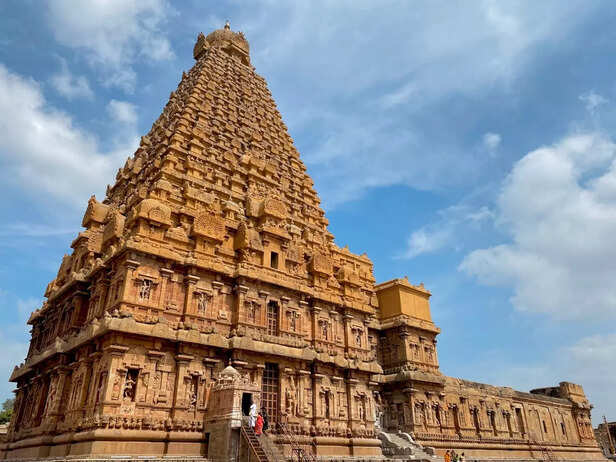
Brihadeeswarar Temple at Sunrise
Image credit : Pexels
The Brihadeeswarar Temple in Thanjavur was built in the 11th century by the great Chola ruler Raja Raja Chola I and is dedicated to Lord Shiva. Recognized as a UNESCO World Heritage Site, this temple is famous for its massive stone vimana that rises with perfect balance and engineering brilliance, even without modern technology. Visitors and devotees often describe a deep sense of strength and calm the moment they step inside. The sacred atmosphere feels grounding and powerful, as if Lord Shiva’s presence silently surrounds and protects every soul. This ancient temple stands as a symbol of spiritual stability, architectural mastery, and timeless devotion that continues to inspire millions today.
Somnath Temple, Gujarat
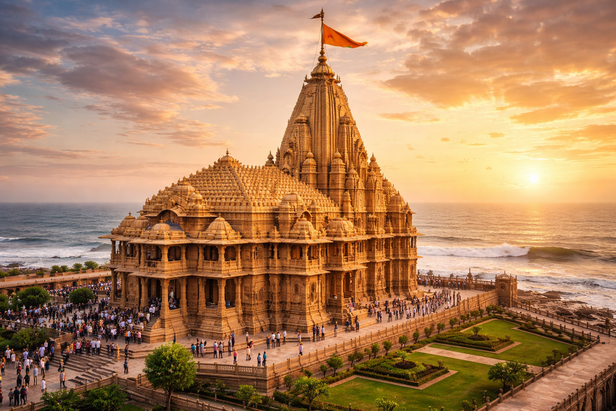
Somnath Temple Facing the Sea
Image credit : ChatGPT(AI)
Somnath Temple is one of the twelve sacred Jyotirlingas of Lord Shiva and holds a powerful place in India’s spiritual history. Over centuries, the temple was destroyed and rebuilt multiple times, yet its divine presence never faded. This living legacy reflects unshakable faith and resilience rooted in devotion. Pilgrims and scholars alike believe Somnath radiates spiritual strength that helps devotees overcome grief, fear, and loss. Its location by the Arabian Sea adds to its calming and uplifting energy. Historical records, religious texts, and continuous worship establish Somnath as a trusted symbol of renewal, courage, and eternal dharma, making it one of the most visited and revered temples in India today.
Jagannath Temple, Odisha
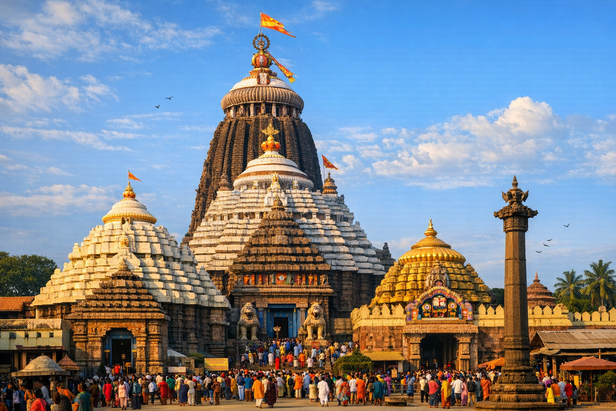
Jagannath Temple in Puri
Image credit : ChatGpt(AI)
Built in the 12th century, the Jagannath Temple in Puri stands as one of India’s most spiritually powerful and socially inclusive shrines. Famous for the grand Rath Yatra, this sacred event reflects the belief that Lord Jagannath comes out to meet every devotee without distinction. Unlike stone idols, the deities are made of wood and are renewed in a ritual called Nabakalebara, symbolizing the cycle of life, death, and rebirth. Devotees and scholars agree that the temple radiates emotional warmth, unity, and compassion. Rooted in ancient scriptures and lived devotion, Jagannath Temple teaches equality, love, and the timeless truth that God belongs to everyone, making it deeply relevant even today.
Meenakshi Amman Temple, Tamil Nadu
Kedarnath Temple, Uttarakhand
Lingaraja Temple, Odisha
Chennakesava Temple, Karnataka
Why These Temples Still Matter Today
Unlock insightful tips and inspiration on personal growth, productivity, and well-being. Stay motivated and updated with the latest at My Life XP.
Frequently Asked Questions (FAQs)
These temples have hosted continuous worship for over 1,000 years. Daily prayers, rituals, and collective faith are believed to create strong spiritual energy that devotees can feel.
Q2. Are these temples really more than 1,000 years old?
Yes. Historical records, inscriptions, and archaeological studies confirm that many famous temples were built between the 7th and 11th centuries and are still active today.
Q3. Can anyone visit these ancient temples?
Most temples are open to all devotees, regardless of background. Visitors are encouraged to follow temple customs and maintain respect and silence.
Q4. What do people feel after visiting these temples?
Many visitors report feeling calm, hopeful, protected, and spiritually uplifted, even without deep religious knowledge.
Q5. How have these temples survived for so long?
Strong architecture, community care, royal patronage in the past, and ongoing devotion have helped preserve them across centuries.
Q6. Are these temples important only for religion?
No. They are also important for history, culture, art, and architecture, making them valuable heritage sites for the world.