Why Triyuginarayan Temple Is More Than Just Shiva and Parvati’s Wedding Site
Noopur Kumari | Fri, 13 Feb 2026
Triyuginarayan Temple is widely known as the celestial wedding site of Lord Shiva and Goddess Parvati during Satya Yuga. Its eternal fire, called Akhand Dhuni, is believed to have burned for three yugas. Yet, ancient narratives hint at something deeper. Some traditions claim that this Vishnu sacred land is connected to the birth of Vamana, linking the temple to cosmic events beyond marriage. This article explores that hidden layer of mythology with spiritual insight and devotional storytelling.

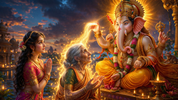
Triyuginarayan
Image credit : ChatGPT(AI)
Most devotees know Triyuginarayan Temple as the sacred wedding site of Lord Shiva and Goddess Parvati. But that is only part of its spiritual legacy. Located in the hills of Uttarakhand, this ancient Vishnu dedicated temple is linked through scripture and regional tradition to Lord Vishnu’s Vamana incarnation, as mentioned in the Vamana Purana. Historians and spiritual scholars highlight its Akhand Dhuni and yuga symbolism as markers of cosmic continuity. More than a divine wedding venue, Triyuginarayan represents balance, preservation, and timeless dharma rooted in authentic Hindu tradition.
![The Akhand Dhuni of Three Yugas]()
In the courtyard of Triyuginarayan Temple burns the sacred Akhand Dhuni, an eternal flame linked to the divine wedding of Lord Shiva and Goddess Parvati in Satya Yuga. Local priests and historians affirm that this fire symbolizes continuity of dharma across Treta and Dwapara Yuga. Devotees collect its ash for marital blessings and spiritual protection. In Vedic tradition, fire represents truth and sacred witness. Maintained daily by temple authorities, the flame stands as a living connection to ancient cosmic history and enduring faith.
![The Celestial Marriage of Shiva and Parvati]()
According to Puranic tradition, Lord Vishnu himself performed the role of Parvati’s brother during her wedding to Lord Shiva at this site. The union symbolized balance between destruction and creation. Gods and sages gathered as witnesses. The marriage was not only personal but cosmic, restoring harmony in the universe. Vedic texts explain that such divine unions represent alignment of energies. This event elevated the temple into eternal significance, making it one of the most sacred marriage sites in Hindu belief.
Beyond the wedding story, local legends and interpretations of the Vamana Purana suggest that this Vishnu dedicated land is connected to the appearance of Lord Vishnu’s Vamana form. Vamana, the dwarf Brahmin avatar, restored cosmic balance by humbling King Bali. Some traditions believe the divine energy of that incarnation manifested here. Though not widely documented, this narrative adds a powerful layer. It transforms the temple from a wedding witness to a birthplace of divine intervention and cosmic justice.
While many focus on Shiva and Parvati, the temple is primarily dedicated to Lord Vishnu. The idol inside represents his sustaining energy. In Vaishnava tradition, Vishnu maintains cosmic order across yugas. Spiritual historians note that naming the temple Triyuginarayan reflects Vishnu’s role as eternal preserver. This balance between Shaiva and Vaishnava energies makes the temple unique. It unites traditions rather than dividing them. The presence of Vishnu gives the site stability beyond a single mythological event.
Imagine Lord Vishnu saying, I stood here as witness, as brother, as protector of dharma. Before the wedding flames rose, the land already carried my vibration. When Vamana walked the earth to restore balance, the seed of that mission was blessed by sacred ground like this. This temple is not just memory. It is continuity. It reminds humanity that every union, every incarnation, and every flame serves one purpose. To restore harmony in creation.
Triyuginarayan Temple is far more than a scenic pilgrimage spot. Known as the sacred site of the Shiva Parvati wedding and the eternal Akhand Dhuni fire, it holds layered meaning rooted in Puranic tradition and Vedic belief. Spiritual scholars and temple records connect it to deeper cosmic symbolism, including rare Vamana legends. For devotees searching about the eternal fire in India or the true story behind Shiva’s marriage, this temple offers authentic heritage and scriptural depth. Look beyond the wedding narrative. The real mystery still glows within its ancient flame.
Unlock insightful tips and inspiration on personal growth, productivity, and well-being. Stay motivated and updated with the latest at My Life XP.
1. Where is Triyuginarayan Temple located?
Triyuginarayan Temple is located in the Rudraprayag district of Uttarakhand, near Kedarnath. It sits in the Himalayan region and is a popular spiritual destination for pilgrims visiting the Char Dham circuit.
2. Why is Triyuginarayan Temple famous?
The temple is widely known as the sacred wedding site of Lord Shiva and Goddess Parvati. The eternal fire called Akhand Dhuni is believed to have burned since Satya Yuga, symbolizing divine witness and sacred vows.
3. What is the significance of the Akhand Dhuni?
The Akhand Dhuni is an eternal flame said to have witnessed the divine marriage. Devotees consider its ash sacred and believe it blesses couples with marital harmony and long lasting relationships.
4. Is Triyuginarayan Temple connected to Lord Vishnu?
Yes. The temple is dedicated to Lord Vishnu. According to tradition, Vishnu performed the role of Parvati’s brother during the wedding ceremony, highlighting his central role in the sacred event.
5. What is the link between Triyuginarayan Temple and Vamana Avatar?
Some lesser known traditions inspired by the Vamana Purana suggest a connection between this sacred land and the energy of Vishnu’s Vamana incarnation, adding deeper spiritual significance beyond the wedding story.
6. When is the best time to visit the temple?
The ideal time to visit is between May and October when the weather is suitable for travel in the Himalayan region. Pilgrims often combine it with Kedarnath visits.
The Eternal Fire That Never Sleeps
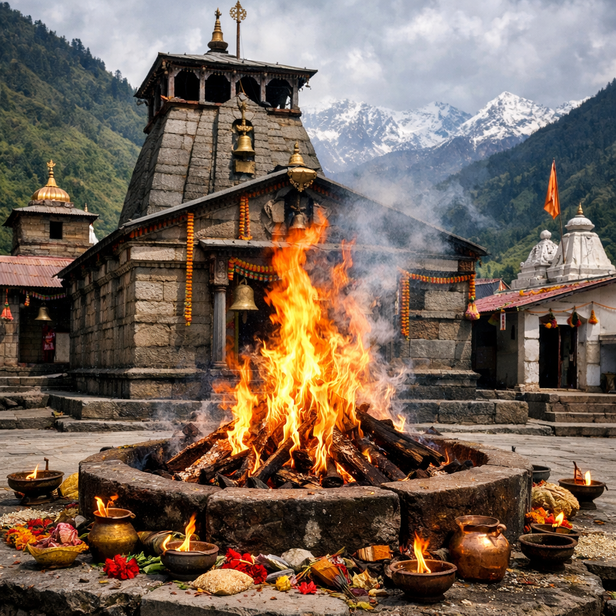
The Akhand Dhuni of Three Yugas
Image credit : ChatGPT(AI)
In the courtyard of Triyuginarayan Temple burns the sacred Akhand Dhuni, an eternal flame linked to the divine wedding of Lord Shiva and Goddess Parvati in Satya Yuga. Local priests and historians affirm that this fire symbolizes continuity of dharma across Treta and Dwapara Yuga. Devotees collect its ash for marital blessings and spiritual protection. In Vedic tradition, fire represents truth and sacred witness. Maintained daily by temple authorities, the flame stands as a living connection to ancient cosmic history and enduring faith.
The Wedding That Shaped Creation
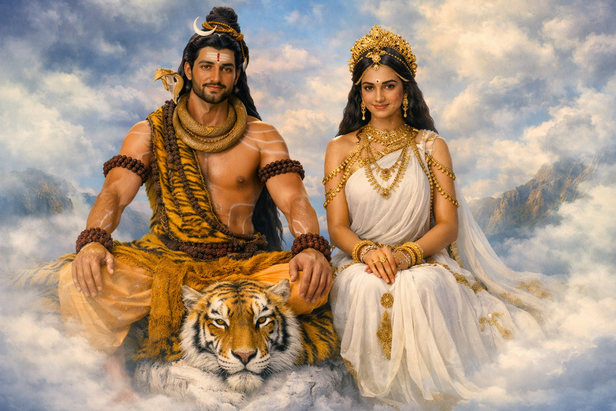
The Celestial Marriage of Shiva and Parvati
Image credit : CHATGPT(AI)
According to Puranic tradition, Lord Vishnu himself performed the role of Parvati’s brother during her wedding to Lord Shiva at this site. The union symbolized balance between destruction and creation. Gods and sages gathered as witnesses. The marriage was not only personal but cosmic, restoring harmony in the universe. Vedic texts explain that such divine unions represent alignment of energies. This event elevated the temple into eternal significance, making it one of the most sacred marriage sites in Hindu belief.
The Hidden Link to Vamana Avatar
The Vishnu Presence Many Forget
If Vishnu Could Speak
Why This Story Matters Today
Unlock insightful tips and inspiration on personal growth, productivity, and well-being. Stay motivated and updated with the latest at My Life XP.
Frequently Asked Questions (FAQs)
Triyuginarayan Temple is located in the Rudraprayag district of Uttarakhand, near Kedarnath. It sits in the Himalayan region and is a popular spiritual destination for pilgrims visiting the Char Dham circuit.
2. Why is Triyuginarayan Temple famous?
The temple is widely known as the sacred wedding site of Lord Shiva and Goddess Parvati. The eternal fire called Akhand Dhuni is believed to have burned since Satya Yuga, symbolizing divine witness and sacred vows.
3. What is the significance of the Akhand Dhuni?
The Akhand Dhuni is an eternal flame said to have witnessed the divine marriage. Devotees consider its ash sacred and believe it blesses couples with marital harmony and long lasting relationships.
4. Is Triyuginarayan Temple connected to Lord Vishnu?
Yes. The temple is dedicated to Lord Vishnu. According to tradition, Vishnu performed the role of Parvati’s brother during the wedding ceremony, highlighting his central role in the sacred event.
5. What is the link between Triyuginarayan Temple and Vamana Avatar?
Some lesser known traditions inspired by the Vamana Purana suggest a connection between this sacred land and the energy of Vishnu’s Vamana incarnation, adding deeper spiritual significance beyond the wedding story.
6. When is the best time to visit the temple?
The ideal time to visit is between May and October when the weather is suitable for travel in the Himalayan region. Pilgrims often combine it with Kedarnath visits.